The sixth temple is Anraku-ji (安楽寺), dedicated to Yakushi Nyorai, the Buddha of healing. The temple has long been associated with hot springs, and even today it is well known among pilgrims for its comfortable lodging.
It sits only about 1 km from the seventh temple — a rare, easy leg of the route that almost feels like a rest between the longer stretches.
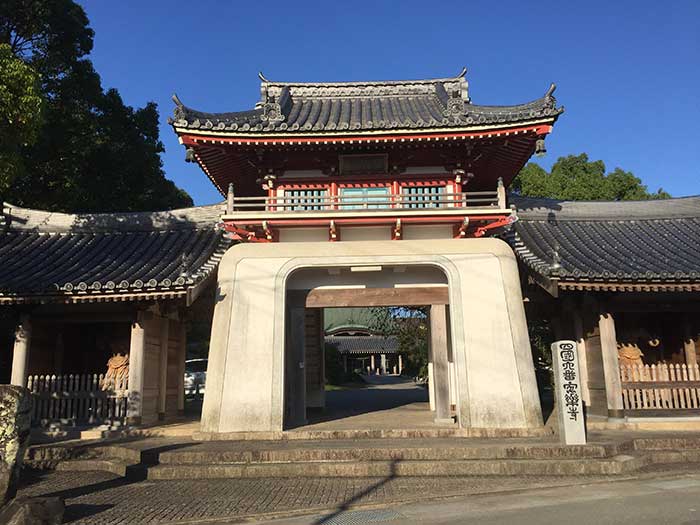
This is the entrance to Anraku-ji, with a gate of a slightly unusual design, much like the temple just before it.
The shape catches your eye as you approach — a small reminder that each of these temples has a character of its own, even though they share the same pilgrimage.
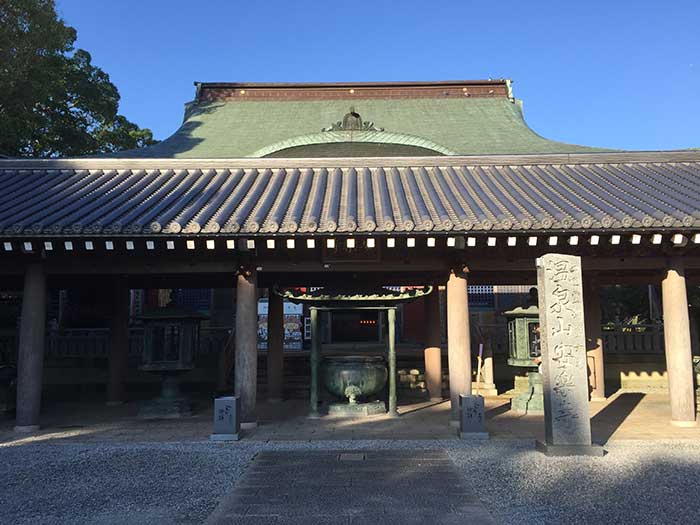
This is the main hall, where Yakushi Nyorai is enshrined. As the Buddha of healing, Yakushi has always drawn those praying for recovery and good health, which suits a temple so closely tied to its hot springs.
A roofed passage built in front of the hall means you cannot quite take in the whole building at once, which is a little bit of a shame.
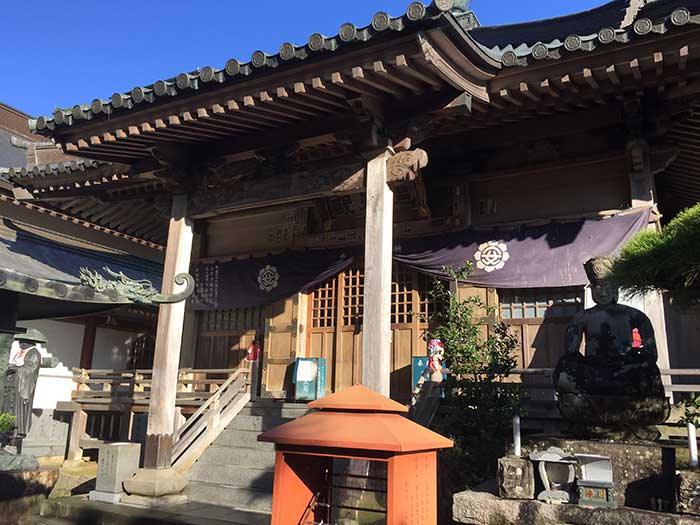
Next is the Daishi-dō. The weather was fine and my spirits were high, so I was able to chant the Heart Sutra with real feeling rather than simply going through the motions.
Small things like a clear sky make a surprising difference over the course of a long pilgrimage.
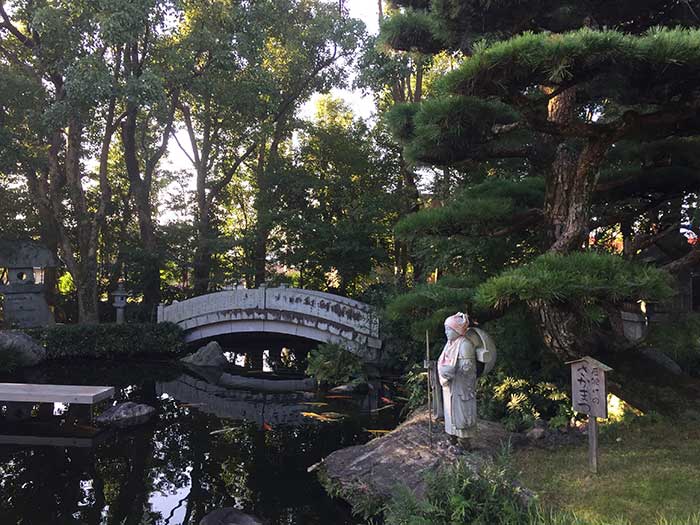
The temple also had a garden laid out in the manner of a traditional Japanese garden, carefully composed and pleasant to look over.
It was the kind of spot that quietly invites you to stop walking for a moment and simply take in the view before continuing.
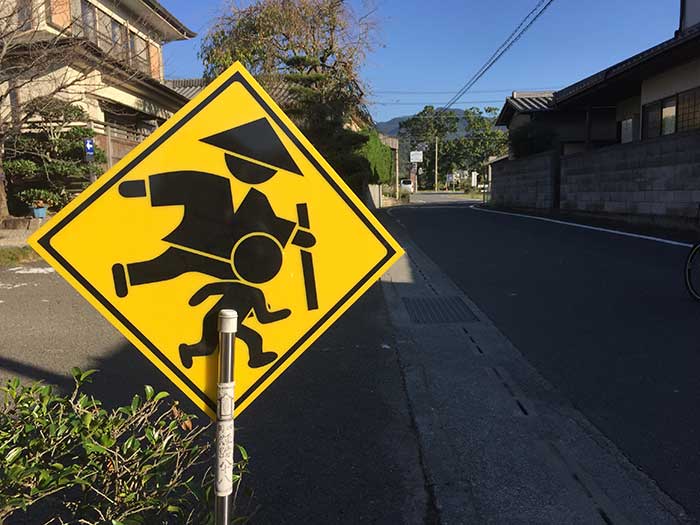
Out on the road beyond the temple gate, a signpost had been put up to guide pilgrims on their way — one of the many small markers that quietly keep you on the right path between temples.
After enough days of walking, you come to feel a real gratitude for whoever placed them there.
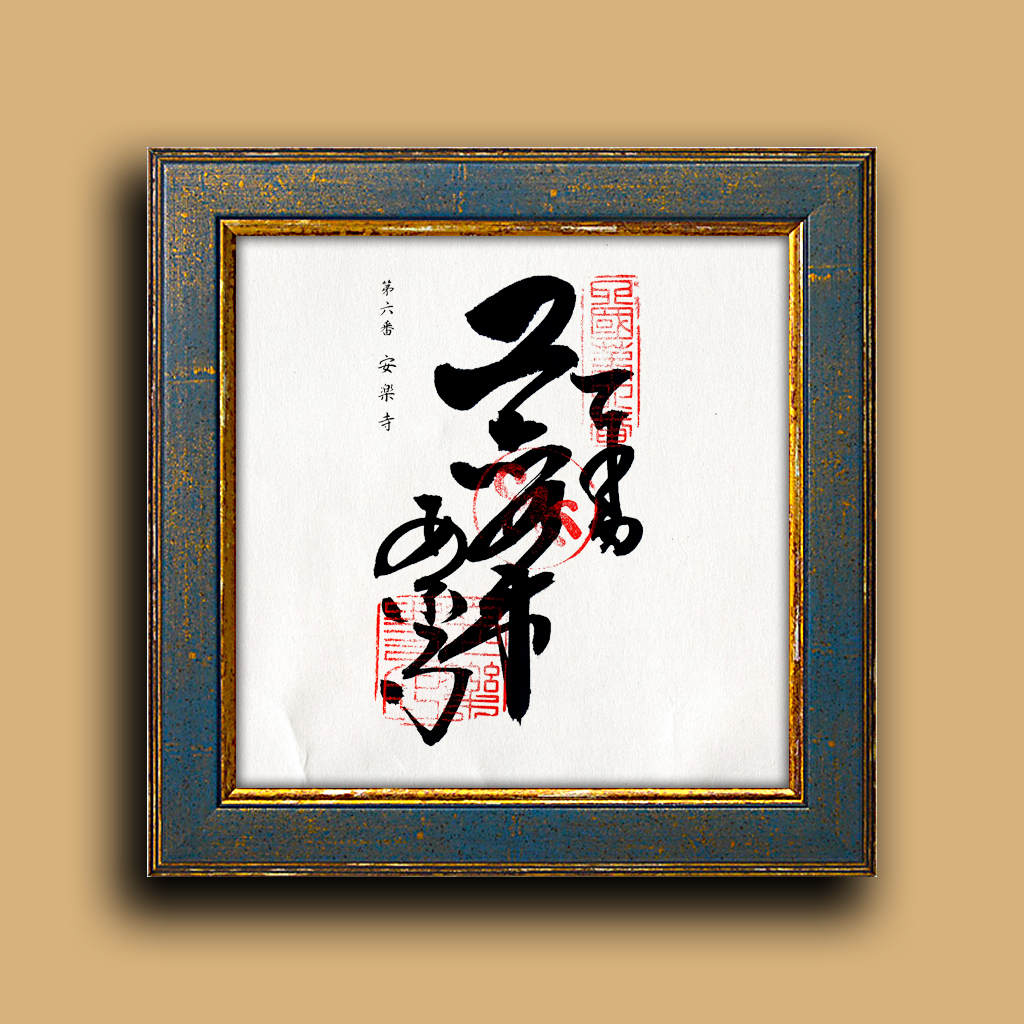
NFT – Crypto Ohenro #83 Goshuin of Anraku-ji(安楽寺) –
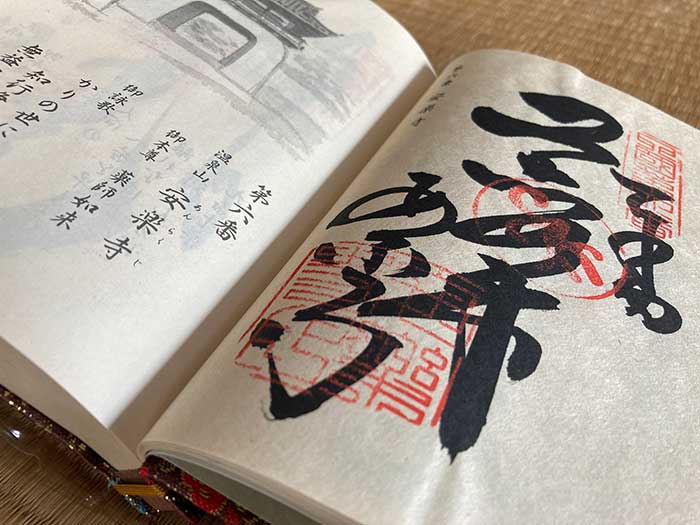
This is the goshuin of the sixth temple, Anraku-ji, its ink dark and clean against the page.
Five temples remained, and the finish was drawing near, though I tried not to hurry the last few days.
The distance to the next temple was about 5.3 km, a steady walk back through the fields of Awa.
Frequently Asked Questions
What is the honzon (principal image) of Anraku-ji (Temple 6)?
The honzon (principal image) of Anraku-ji(安楽寺), Temple 6 of the Shikoku 88 pilgrimage, is Yakushi Nyorai(薬師如来). It is enshrined in the temple's main hall (hondō), where pilgrims offer incense, recite the Heart Sutra, and receive the temple's goshuin (hand-brushed seal).
Where is Anraku-ji located?
Anraku-ji stands in Kamiita, Tokushima Prefecture, in the old province of Awa, on the island of Shikoku, Japan. It is the sixth of the eighty-eight temples of the Shikoku Henro, the circular Buddhist pilgrimage walked in the path of Kōbō Daishi (Kūkai).
Which Buddhist sect does Anraku-ji belong to?
Anraku-ji belongs to the Kōyasan school of Shingon Buddhism. Its mountain name (sangō), the traditional honorific title by which the temple is also known, is Onsenzan Rurikō-in(温泉山 瑠璃光院).
When was Anraku-ji founded?
Anraku-ji was founded by Kōbō Daishi (Kūkai), early 9th century. Its history is closely tied to the early growth of the Shikoku pilgrimage.
Which temple comes after Anraku-ji, and how far is it?
The next temple on the route is Temple 7, Jūraku-ji (about 1 km). Walking in numerical order, pilgrims continue from Anraku-ji to keep visiting each of the 88 temples and collecting their goshuin.
📖 See the full list of all 88 Shikoku temples →
Can’t make the pilgrimage yourself?Ohenro Gift can walk the 88 temples on your behalf (daisan) and deliver the completed nokyocho.