The seventh temple is Jūraku-ji (十楽寺), whose name evokes the “ten joys” of Amida’s Pure Land, and which enshrines Amida Nyorai.
It lies about 4.2 km from the eighth temple, and the walk there leads through the quiet farmland of Awa.
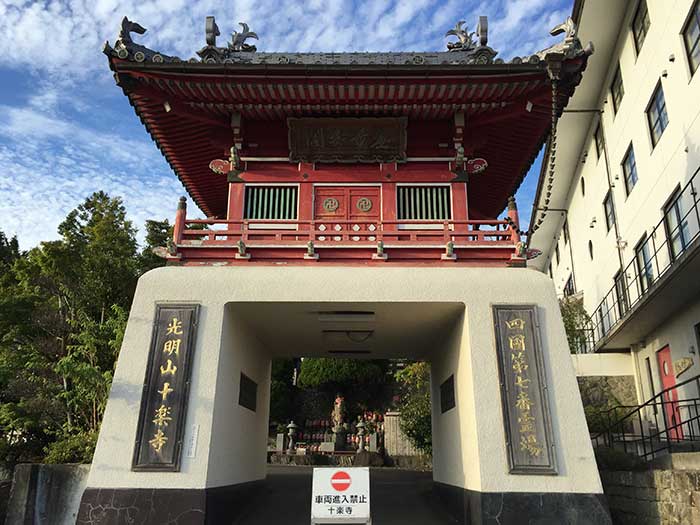
This is the entrance to Jūraku-ji. The gate stands out at once: its colour and shape are quite different from those of the other temples, a striking two-storey design that draws the eye.
It is the kind of structure that makes you pause for a moment before stepping through, wondering what lies beyond.
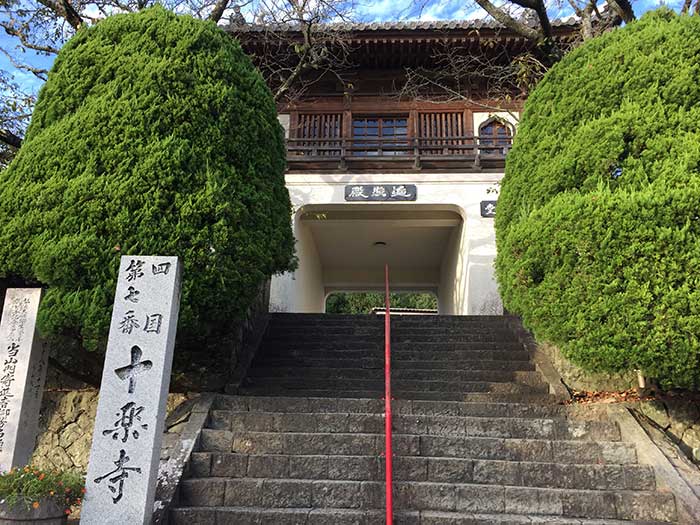
A little further on, a second gate appears at the top of a short flight of stairs.
Climbing toward it, with one gate behind and another ahead, gives the approach a pleasant sense of passing deeper into the temple.
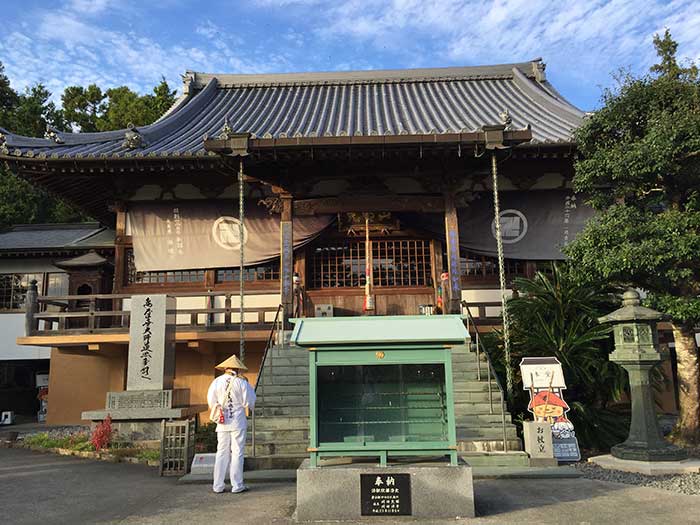
This is the main hall of Jūraku-ji, where Amida Nyorai is enshrined. Tradition says Kōbō Daishi carved the image himself after a vision of the Buddha while preaching nearby.
I offered incense and recited the sutra here, as at every temple along the way.
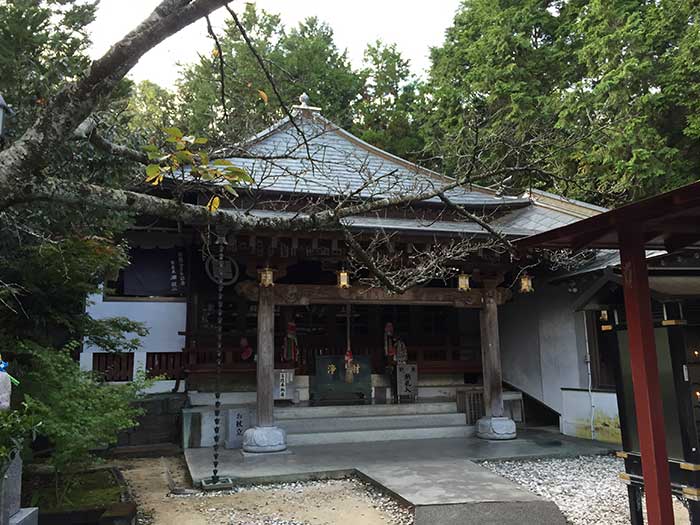
Next is the Daishi-dō, which enshrines a statue of Kōbō Daishi. Here I chanted the Heart Sutra and prayed, as always, for the safety of my family and for peace in the world.
To the side of the main hall stands a Jizō long believed to heal ailments of the eyes, and many visitors stop to pray before it for clear sight.
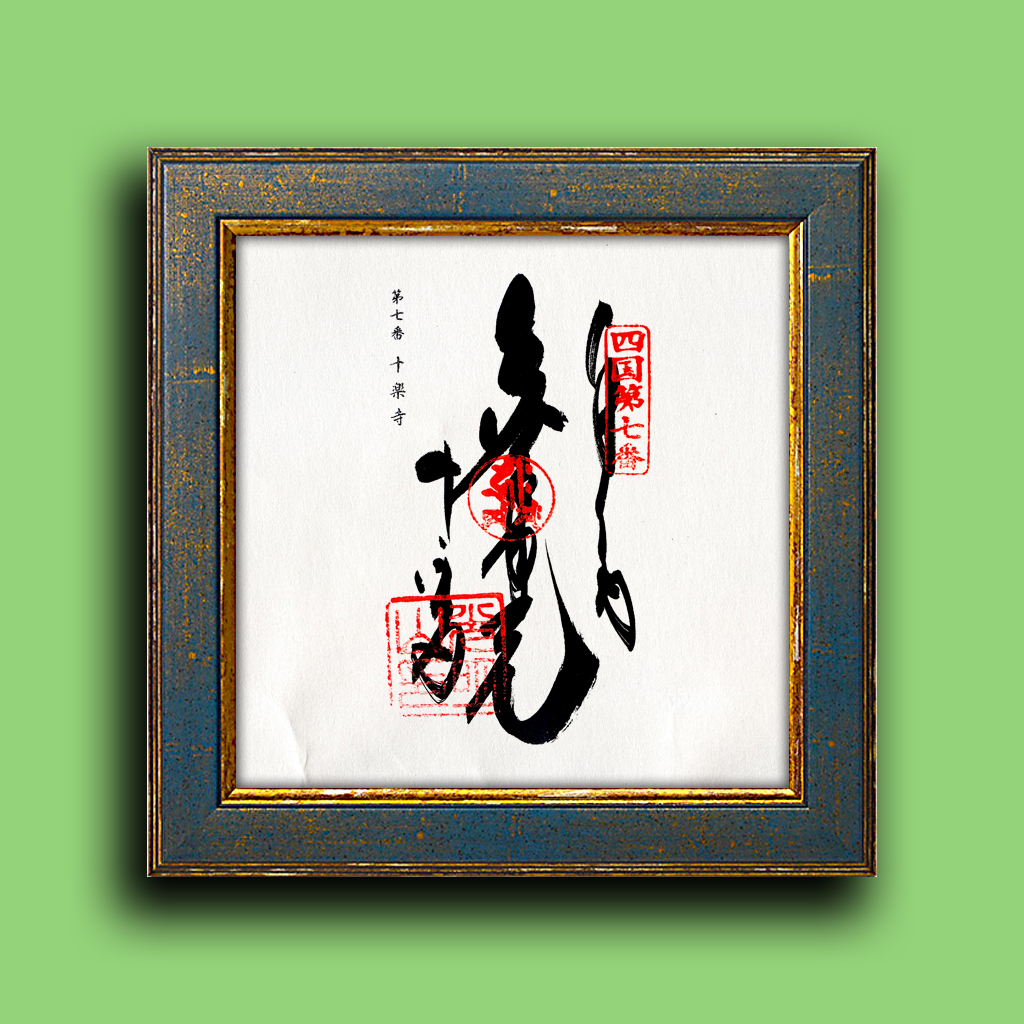
NFT – Crypto Ohenro #82 Goshuin of Jūraku-ji(十楽寺) –
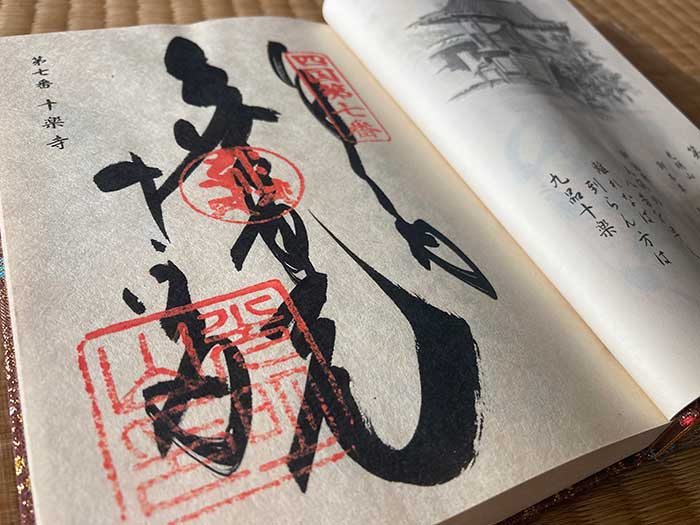
This is the goshuin of the seventh temple, Jūraku-ji, another seal added to the growing book.
Six temples now remained, and the end was slowly coming into view.
The next was only about 1 km away — practically right under my nose, an unusually easy leg.
Frequently Asked Questions
What is the honzon (principal image) of Jūraku-ji (Temple 7)?
The honzon (principal image) of Jūraku-ji(十楽寺), Temple 7 of the Shikoku 88 pilgrimage, is Amida Nyorai(阿弥陀如来). It is enshrined in the temple's main hall (hondō), where pilgrims offer incense, recite the Heart Sutra, and receive the temple's goshuin (hand-brushed seal).
Where is Jūraku-ji located?
Jūraku-ji stands in Awa, Tokushima Prefecture, in the old province of Awa, on the island of Shikoku, Japan. It is the seventh of the eighty-eight temples of the Shikoku Henro, the circular Buddhist pilgrimage walked in the path of Kōbō Daishi (Kūkai).
Which Buddhist sect does Jūraku-ji belong to?
Jūraku-ji belongs to the Kōyasan school of Shingon Buddhism. Its mountain name (sangō), the traditional honorific title by which the temple is also known, is Kōmyōzan Renge-in(光明山 蓮華院).
When was Jūraku-ji founded?
Jūraku-ji was founded by Kōbō Daishi (Kūkai), early 9th century (Daidō era, 806–810). Its history is closely tied to the early growth of the Shikoku pilgrimage.
Which temple comes after Jūraku-ji, and how far is it?
The next temple on the route is Temple 8, Kumadani-ji (about 4.2 km). Walking in numerical order, pilgrims continue from Jūraku-ji to keep visiting each of the 88 temples and collecting their goshuin.
📖 See the full list of all 88 Shikoku temples →
Can’t make the pilgrimage yourself?Ohenro Gift can walk the 88 temples on your behalf (daisan) and deliver the completed nokyocho.