ABOUT OHENRO
What’s “OHENRO”?
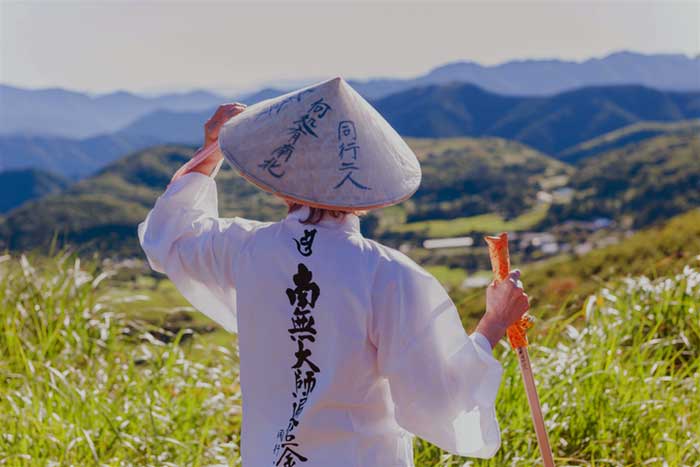
“Ohenro” is the pilgrimage around the island of Shikoku in Japan. People have walked it since ancient times.
Around the year 800, the monk Kukai — known as “Kobo Daishi,” who spread Buddhism in Japan — traveled to the 88 temples tied to his teachings. The route he left behind is unlike any other pilgrimage in the world.
Many faiths have their own sacred journeys — in Christianity, Judaism and Islam — but Japan’s pilgrimage tradition is quite different.
The Camino de Santiago covers about 800 kilometers, but the Ohenro is longer and harder: roughly 1,400 kilometers, and more than 40 days on foot.
*Kukai (Kobo Daishi) was a deeply respected monk who helped bring Esoteric (Shingon) Buddhism to Japan. He also opened a school that ordinary people could attend, was a gifted artist and calligrapher, and made his mark in many other fields.
Learn more here ↓↓
https://88shikokuhenro.jp/en/
What happens when you do the pilgrimage?
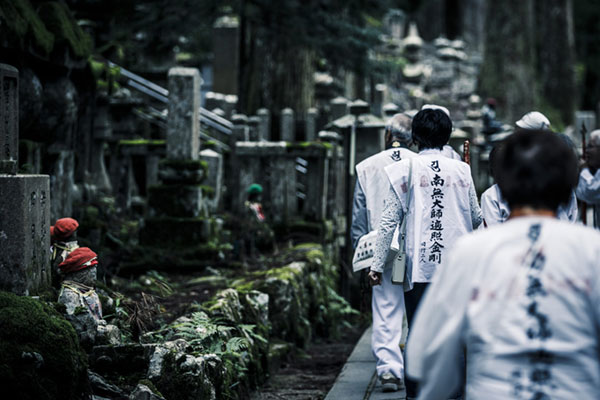
So what do people get out of the pilgrimage?
There are many stories and old beliefs, but the ones you hear most often are these:
- Wishes are fulfilled.
- Your troubles ease, and good fortune comes.
- A chance to meet Kukai (Kobo Daishi).
Wishes are fulfilled
People walk for many reasons — sightseeing, spiritual practice, making a wish, or simple devotion. It’s said that if you visit all 88 temples and finish the journey with a sincere heart, your wish can come true.
Here are a couple of the stories people tell:
“Someone whose rheumatoid arthritis had grown so bad they could barely walk slowly got better by walking a little at a time along the route.”
“Someone who felt stuck in work and love found relief on the pilgrimage, let go of their frustration, and turned their life around.”
Stories like these can make you believe in miracles and want to set out yourself. Even so, it’s worth remembering that not every wish will be granted.
- I want to live a longer life.
- I want to become wealthy.
- I want a romantic partner.
- I want to find myself.
- I want to make up for my mistakes.
Wishes like these can’t be handed to you by someone else. They come only from your own effort.
Your worries ease, and good things follow
The pilgrimage changes something inside you. It’s a journey where you face yourself and grow.
As you grow calmer and more grounded, worry and stress fade — work goes more smoothly, and good relationships can follow.
“Feeling a little unsatisfied… always wanting what you don’t yet have…”
That kind of constant wanting is what leads to suffering.
Walking the long road with a quiet mind clears your head and helps you see what really matters.
You might meet Kukai (Kobo Daishi)
It may sound hard to believe, but some say you can meet Kukai (Kobo Daishi) himself along the way.
The legend goes that if you walk the route in reverse, you may cross paths with Kukai, who is said to still be making the rounds in the usual direction.
On my own pilgrimage, while camping in the mountains, I once heard an animal breathing right next to my tent — a bear or a wild boar, I couldn’t tell which.
I braced myself, ready for it — but within a few seconds, it was gone.
I like to think it was Kukai, walking the route, who came to my aid.
What does a Goshuin mean?

Collecting goshuin (temple and shrine seals) is popular in Japan, but the one you receive on this pilgrimage is different.
*Strictly speaking, it’s called a “nokyo” (a sutra record), not a goshuin.
At each temple, the priests recite sutras to the main image and to Kukai, and the seal you receive is a “mark” of that spiritual bond.
These seals are seen as a kind of “passport to heaven,” or a charm that protects you after death — which is why they are traditionally placed in the coffin.
For the Shikoku pilgrimage, the seals are laid inside the coffin before cremation.
In short, it’s nothing like collecting stamps in a passport or at tourist spots — it carries far more meaning.
What visitors say
Philippe have been to SHIKOKU PILGRIMAGE, and he told us his story of a multi-site pilgrimage of 88 temples✨It was so amazing! What a wonderful experience of Japan! #sakurahostel #sakuracafe #asakusa #shikoku #pilgrimage pic.twitter.com/hFBVPSsPD6
— SakuraHostelAsakusa (@asakusa_hostel) February 24, 2020
I chant the hannya shingyou (heart sutra) when my mind’s spinning. It takes me back to the Shikoku Pilgrimage, and it brings the peace from that, and a piece of that, back to me. I am so grateful.https://t.co/aMsk6LXZVZ#HeartSutra#般若心経#ShikokuPilgrimage#四国八十八ヵ所
— Smitha ?? (@smithaprasadh) March 22, 2022
I am studying shodo since 25 years and I am practicing Shakyo every day. I have done the Shikoku Pilgrimage in Japan n 2008. One the most amazing experience I have done in all my life. I hope the best for you and your cat. I continue to follow you. Have a nice day from Montreal.
— Jalbert Clarence (@ClarenceJalbert) March 4, 2022
It’s really just given me another reason to want to spend time in Shikoku someday. For years I’ve dreamed of doing the Shikoku pilgrimage, where you go around the island visiting all 88 temples, & there are several of those temples in the prefecture where the film takes place.
— Kaylyn Saucedo – MarzGurl ➡️ Fighting the Yakuza (@MarzGurl) January 15, 2022
I have *always* wanted to do the Shikoku pilgrimage walk. I can’t explain it.
In troubled times, a ritual walk can clear the mind and soothe the soul | Walking | The Guardian https://t.co/IeDd7hUxmt
— ?Ro “Bajoran Scum” Laren 2022 ? (@GinnyRED57) October 31, 2020
Pilgrimages are timeless and universal. 3 years ago this week I was on the Shikoku pilgrimage in Japan visiting temples and experiencing the ancient and storied landscapes of the Island of Shikoku. This multimedia experience is what emerged from our time there… https://t.co/cTDfMLZ3bd
— Emmanuel Vaughan-Lee (@evaughanlee) March 26, 2021
https://t.co/2xjzgNNEBk
Super cute 5 second animation on Shikoku Pilgrimage with pilgrim (ohenro) receiving “osettai” (gift offering) of tea.— Transformational Japan Travel (@MarkGroenewold1) January 26, 2022
Find peace while challenging your body and mind walking in the footsteps of pilgrims. The 88-temple Shikoku Henro is an excellent choice if you’re looking for a route away from the larger tour groups. https://t.co/806ECQppja #Japan #Pilgrimage #ShikokuHenro pic.twitter.com/pp45IsLZ0a
— All About Japan (@AllAbout_Japan) February 8, 2023
Can’t undertake the 1,400 km journey yourself? Through daisan (proxy pilgrimage), Ohenro Gift can walk the 88 temples on your behalf and deliver an authentic nokyocho — a record recognized by the Shikoku Temple Association just like one walked in person.