The fifth temple on the Shikoku pilgrimage is Jizō-ji (地蔵寺). Walking the route, it lies about 5.3 km from the sixth temple — a steady stretch through the quiet edge of Itano, where the Tokushima plain meets the foothills.
After the long rhythm of the earlier days, arriving here feels like stepping into a calmer chapter of the journey.
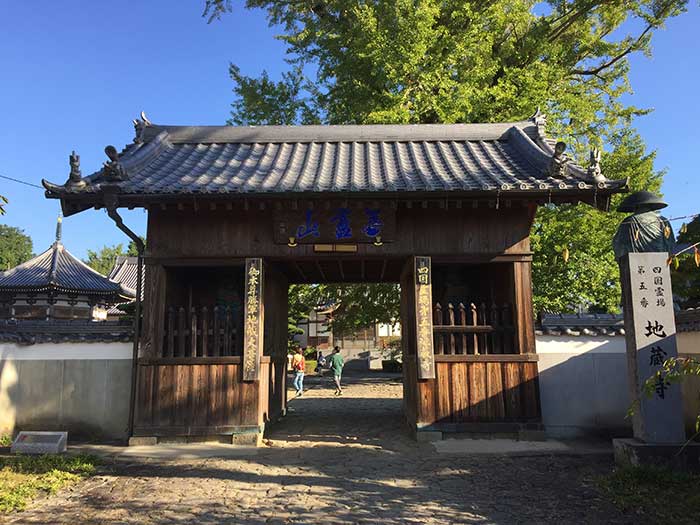
The approach brings you to Jizō-ji’s entrance gate. It is small and unassuming rather than a towering temple front, and there is something quietly endearing about its modest scale — a reminder that not every sacred place announces itself loudly.
Passing beneath it, the noise of the road falls away and the grounds open up ahead.
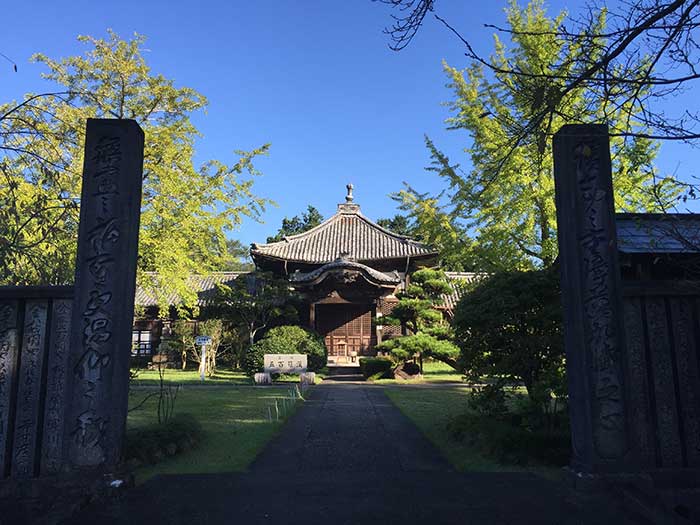
From the gate a path leads on toward the main hall. On the day of my visit the light fell through the trees in long bands, and the contrast of light and shadow across the stones was beautiful enough to make me slow my pace.
These in-between moments — simply walking through a temple’s grounds — are often where the pilgrimage leaves its deepest impression.
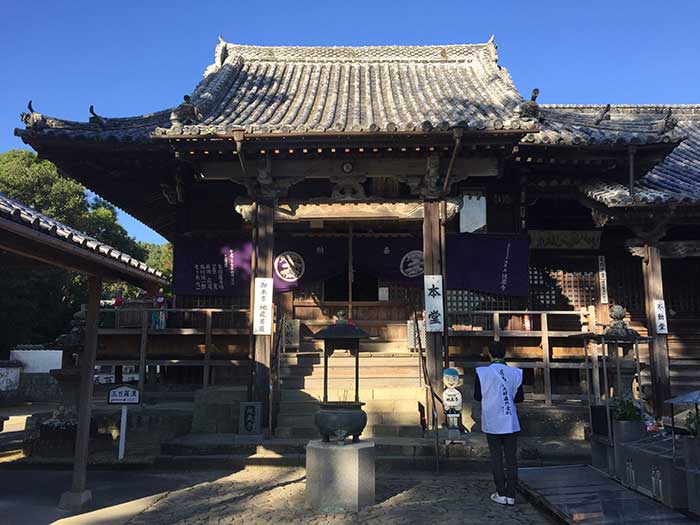
This is the main hall (hondō) of Jizō-ji, where the principal image, Shōgun Jizō Bosatsu — the “victory” Jizō — is enshrined.
It is an unusual honzon: while Jizō is normally shown as a gentle figure who watches over children and travellers, here he takes the form of a warrior, which is why the temple long drew the devotion of emperors and warlords alike.
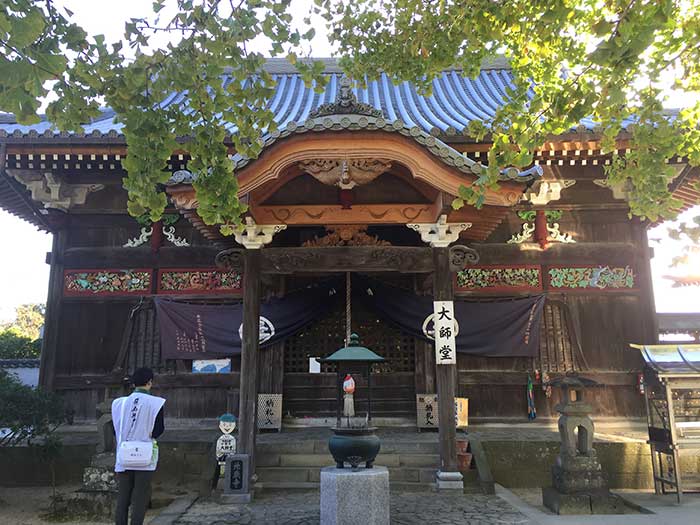
Beside the main hall stands the Daishi-dō, which enshrines a statue of Kōbō Daishi. As at every temple, I stopped before both halls, quietly recited the Heart Sutra, and offered a prayer for the safety of my family and for peace in the world.
Repeated at temple after temple, the words gradually stop feeling like a ritual to perform and become something closer to a steady habit of the heart.
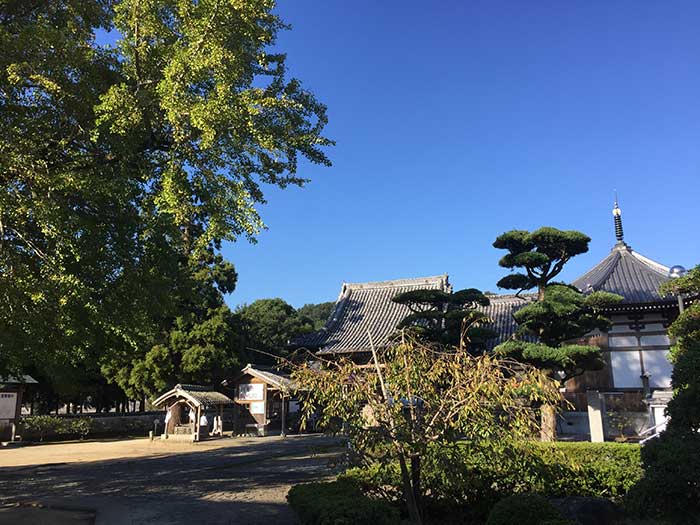
What stayed with me most at Jizō-ji was the openness of the grounds.
The precincts are wide and the sky above them broad, and standing under that blue I felt the kind of unhurried calm the pilgrimage gives you when you least expect it — the sort of place where you could simply sit, breathe, and let the day drift by.
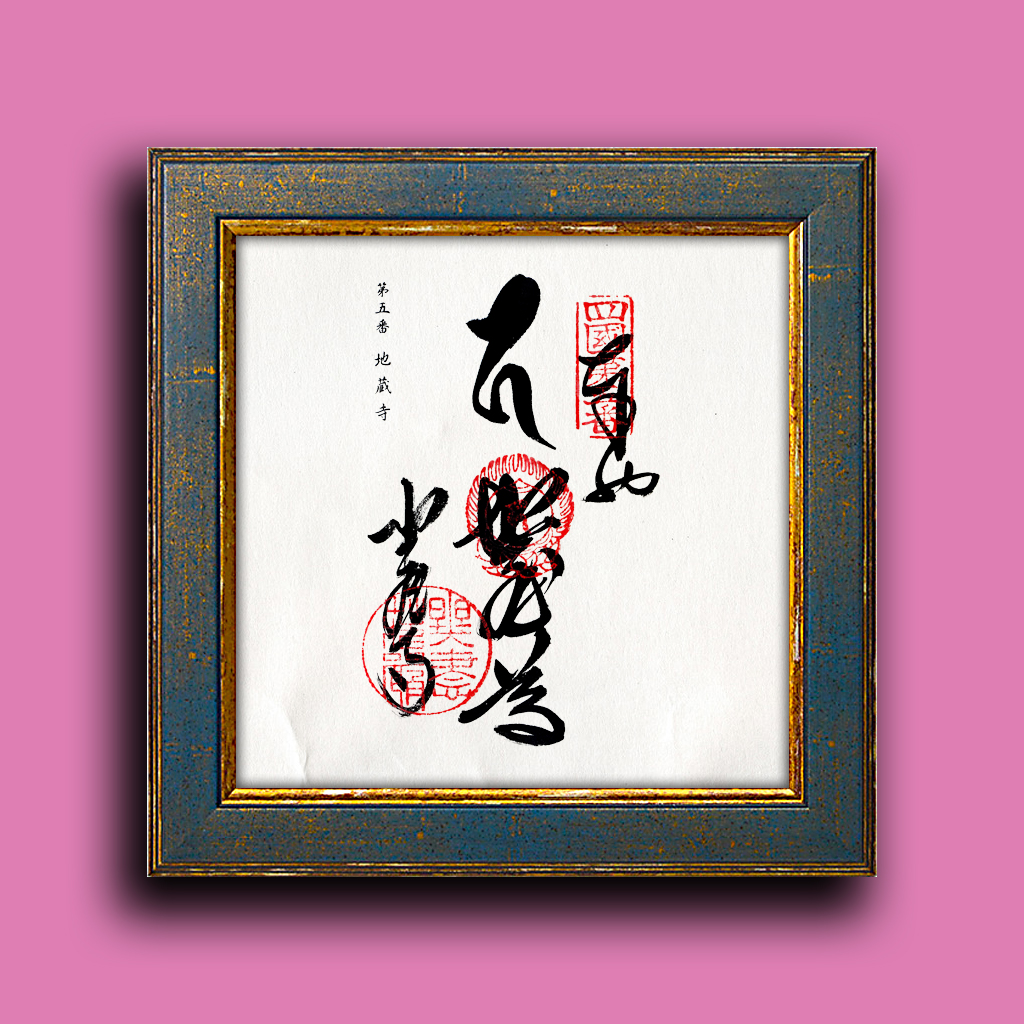
NFT – Crypto Ohenro #84 Goshuin of Jizō-ji(地蔵寺) –
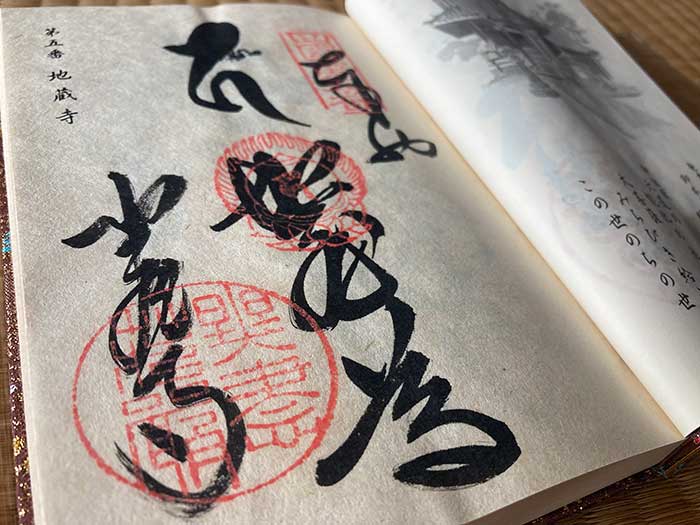
This is the goshuin (red seal) of the fifth temple, Jizō-ji, freshly brushed and pressed into the page.
With it received, only four temples remained before the end of the pilgrimage, and the finish had begun to feel real.
The next temple lay about 2 km down the road — a short walk through the calm of the countryside.
Frequently Asked Questions
What is the honzon (principal image) of Jizō-ji (Temple 5)?
The honzon (principal image) of Jizō-ji(地蔵寺), Temple 5 of the Shikoku 88 pilgrimage, is Shōgun Jizō Bosatsu(勝軍地蔵菩薩). It is enshrined in the temple's main hall (hondō), where pilgrims offer incense, recite the Heart Sutra, and receive the temple's goshuin (hand-brushed seal).
Where is Jizō-ji located?
Jizō-ji stands in Itano, Tokushima Prefecture, in the old province of Awa, on the island of Shikoku, Japan. It is the fifth of the eighty-eight temples of the Shikoku Henro, the circular Buddhist pilgrimage walked in the path of Kōbō Daishi (Kūkai).
Which Buddhist sect does Jizō-ji belong to?
Jizō-ji belongs to the Omuro school of Shingon Buddhism. Its mountain name (sangō), the traditional honorific title by which the temple is also known, is Mujinzan Shōgon-in(無尽山 荘厳院).
When was Jizō-ji founded?
Jizō-ji was founded 821, by Kōbō Daishi (Kūkai), by order of Emperor Saga. Its history is closely tied to the early growth of the Shikoku pilgrimage.
Which temple comes after Jizō-ji, and how far is it?
The next temple on the route is Temple 6, Anraku-ji (about 5.3 km). Walking in numerical order, pilgrims continue from Jizō-ji to keep visiting each of the 88 temples and collecting their goshuin.
📖 See the full list of all 88 Shikoku temples →
Can’t make the pilgrimage yourself?Ohenro Gift can walk the 88 temples on your behalf (daisan) and deliver the completed nokyocho.