The first temple of the Shikoku pilgrimage is Ryōzen-ji (霊山寺) — though for me, walking the route in reverse, it was the very last temple of the whole journey, and reaching it meant the end was finally in sight.
Only about 1.2 km separated it from the second temple, and as I covered that short stretch there was a strange mix of anticipation and reluctance. After so many days on the road, part of me wanted to arrive, and part of me did not want it to be over.
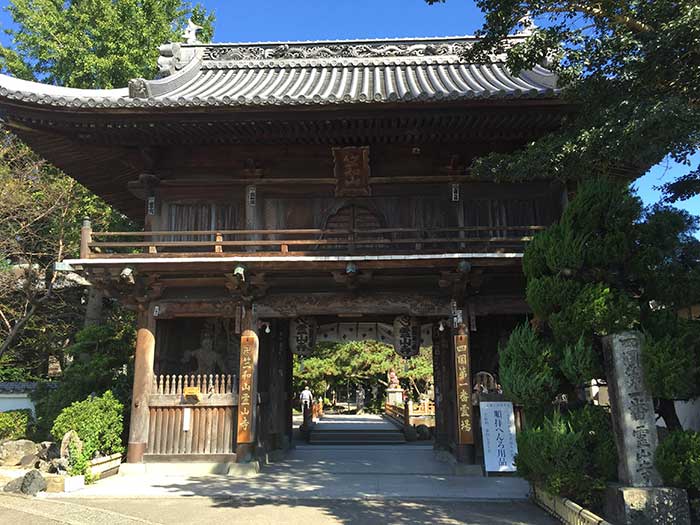
This is the entrance to Ryōzen-ji. As the gateway temple of the entire pilgrimage, it has an especially large and splendid main gate — grander, in fact, than the modest size of the grounds behind it might lead you to expect.
Passing under it felt significant in both directions: for most pilgrims it is the very first gate of the journey, while for me it was the last one I would walk through.
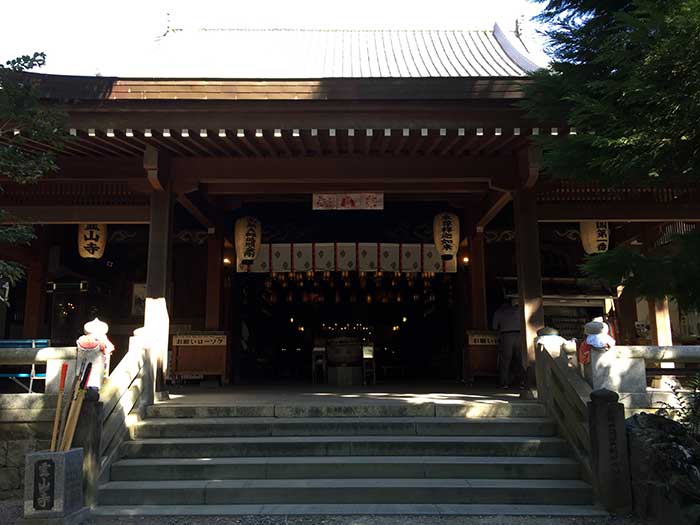
This is the main hall, where Shaka Nyorai is enshrined. In the photograph the lighting flattens everything, but inside the hall countless lanterns hang from the ceiling, their small flames receding into the dark in a way that feels genuinely mysterious.
I stood before the altar, offered incense, and recited the Heart Sutra, conscious that by now I had performed the same quiet ritual at every one of the eighty-eight temples.
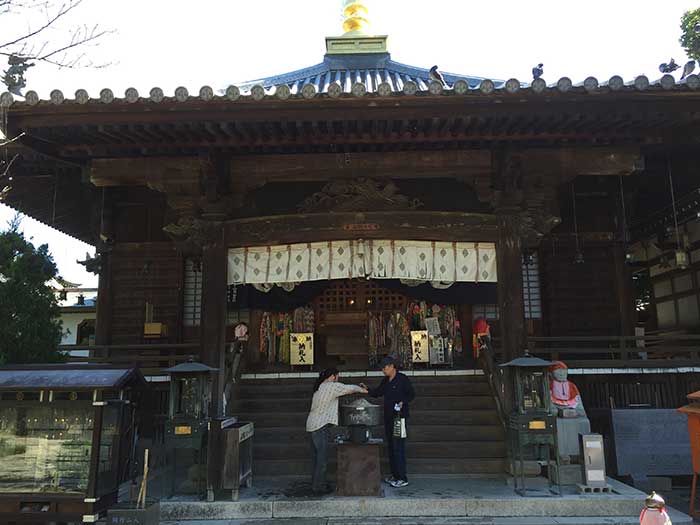
This is the Daishi-dō, which enshrines a statue of Kōbō Daishi. The Heart Sutra that I had chanted perhaps two hundred times over the course of the pilgrimage was recited here for the very last time.
Standing before the hall, I prayed that the world might be freed from conflict and poverty, and that happiness would somehow reach every person. After so many repetitions, the words no longer felt like a duty but like something settled deep inside me.
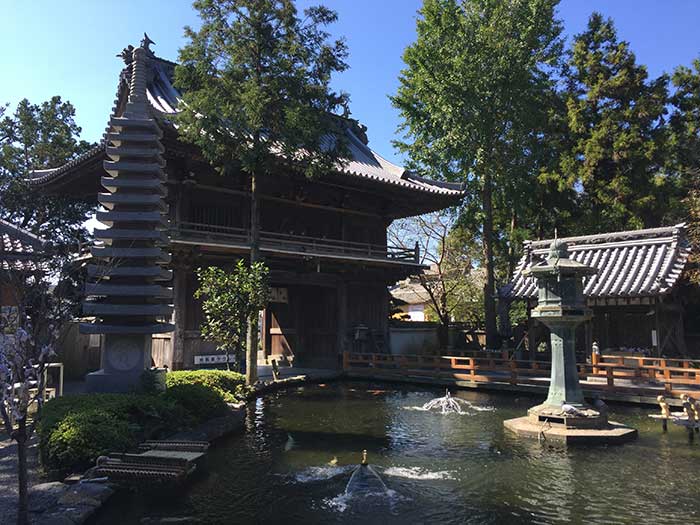
There is also a large pond within the precincts, with carp drifting slowly beneath the surface. I lingered beside it for a while, watching the water and letting the calm of the place sink in.
With the walking almost done, there was no need to hurry, and it felt good simply to stand and look.
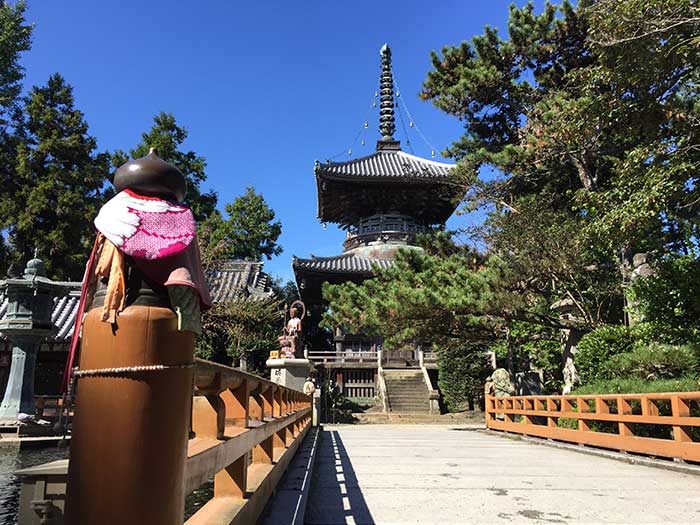
Ryōzen-ji is a lovely temple to wander through. An old-style arched bridge makes the short walk across the grounds a pleasure, and a pagoda rises over the central garan, the precinct where monks once trained.
For a temple that so many people pass through at the very start of their pilgrimage, it carries its long history lightly and warmly.
NFT – Crypto Ohenro #88 Goshuin of Ryōzen-ji(霊山寺) –
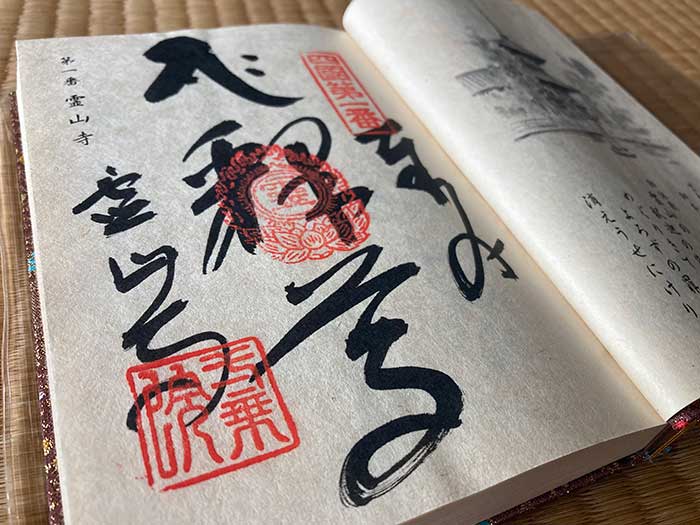
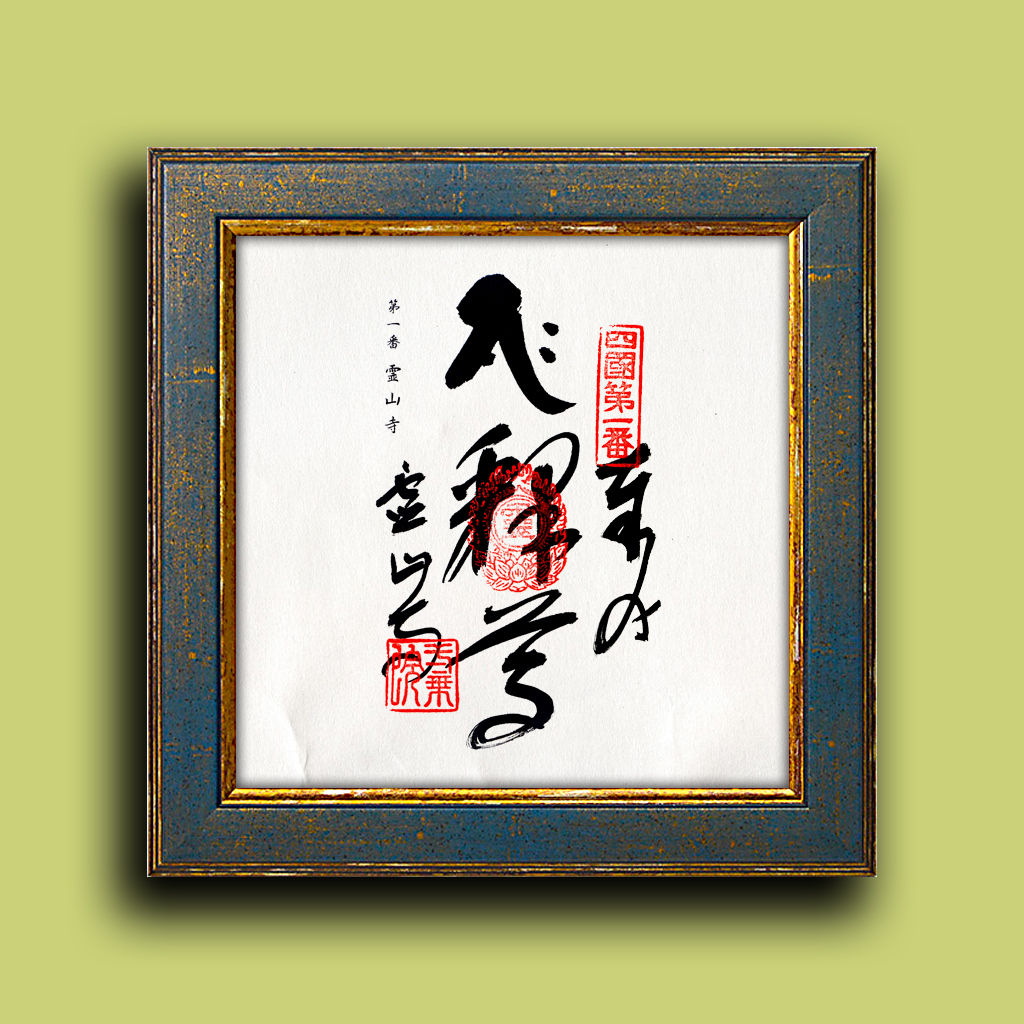
This is the goshuin of the first temple, Ryōzen-ji — the very last seal I would receive, pressed fresh into the final open page.
With this seal, I had finally completed all eighty-eight temples and filled the book from cover to cover.
The pilgrimage was over at last — and, now that it was, I felt a little lonely, the way one does at the end of any long road.
Frequently Asked Questions
What is the honzon (principal image) of Ryōzen-ji (Temple 1)?
The honzon (principal image) of Ryōzen-ji(霊山寺), Temple 1 of the Shikoku 88 pilgrimage, is Shaka Nyorai(釈迦如来). It is enshrined in the temple's main hall (hondō), where pilgrims offer incense, recite the Heart Sutra, and receive the temple's goshuin (hand-brushed seal).
Where is Ryōzen-ji located?
Ryōzen-ji stands in Naruto, Tokushima Prefecture, in the old province of Awa, on the island of Shikoku, Japan. It is the first of the eighty-eight temples of the Shikoku Henro, the circular Buddhist pilgrimage walked in the path of Kōbō Daishi (Kūkai).
Which Buddhist sect does Ryōzen-ji belong to?
Ryōzen-ji belongs to the Kōyasan school of Shingon Buddhism. Its mountain name (sangō), the traditional honorific title by which the temple is also known, is Jikuwazan Ichijō-in(竺和山 一乗院).
When was Ryōzen-ji founded?
Ryōzen-ji was founded by Gyōki, by order of Emperor Shōmu (8th century); Kōbō Daishi (Kūkai) practised here in 815. Its history is closely tied to the early growth of the Shikoku pilgrimage.
Which temple comes after Ryōzen-ji, and how far is it?
The next temple on the route is Temple 2, Gokuraku-ji (about 1.2 km). Walking in numerical order, pilgrims continue from Ryōzen-ji to keep visiting each of the 88 temples and collecting their goshuin.
📖 See the full list of all 88 Shikoku temples →
Can’t make the pilgrimage yourself?Ohenro Gift can walk the 88 temples on your behalf (daisan) and deliver the completed nokyocho.