The second temple is Gokuraku-ji (極楽寺), the “Temple of Paradise,” dedicated to Amida Nyorai, the Buddha of the Western Pure Land. The name alone gives the place a gentle, welcoming feeling.
It lies about 2.5 km from the third temple along the route I was walking — an easy stretch on a clear day, with the gate coming into view before you expect it.
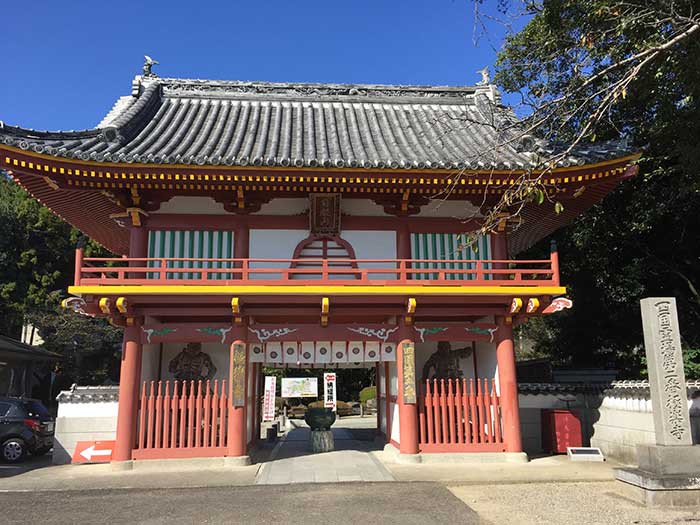
This is the entrance to Gokuraku-ji. Like the temple just before it, the gate is painted a deep, vivid red and makes a magnificent first impression as you approach.
The colour stands out brightly against the surrounding greenery, and it sets the tone for the calm, carefully kept grounds that open up beyond it.
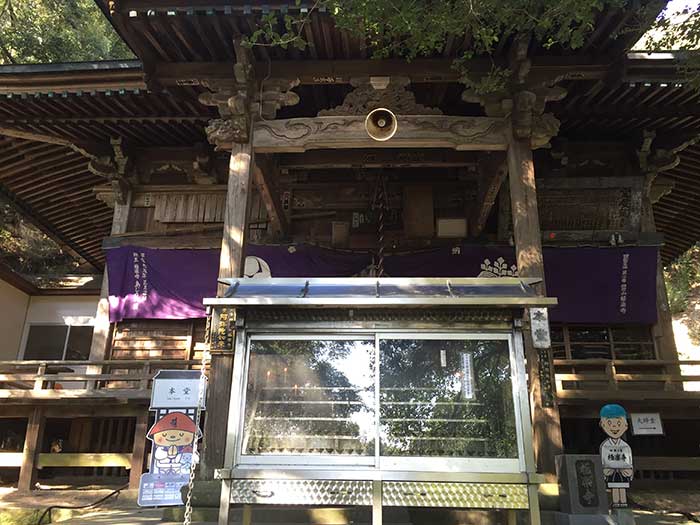
This is the main hall, where Amida Nyorai is enshrined. I stopped before it, offered incense, and recited the sutra just as I had at every hall along the way.
There is a quiet steadiness that builds from repeating these same simple acts temple after temple — gradually it becomes less a ritual to perform and more a rhythm you settle into.
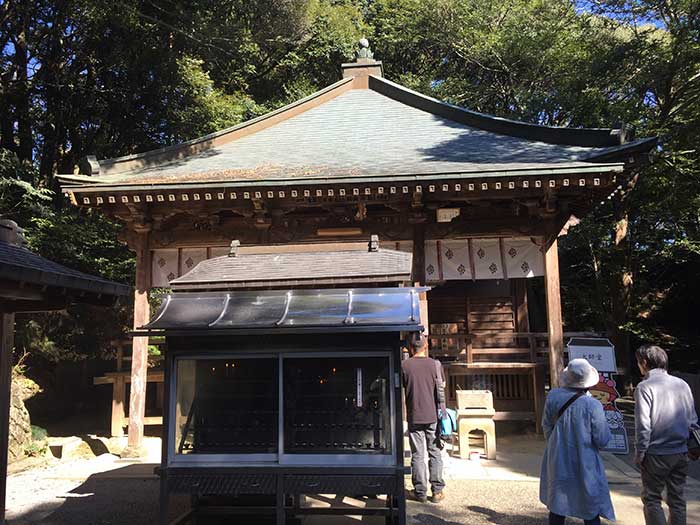
Next is the Daishi-dō, where I chanted the remaining portion of the Heart Sutra before the statue of Kōbō Daishi.
As at every temple since the start of the pilgrimage, I prayed for the safety of my family and for peace in the world — the same simple wish, carried faithfully from hall to hall.
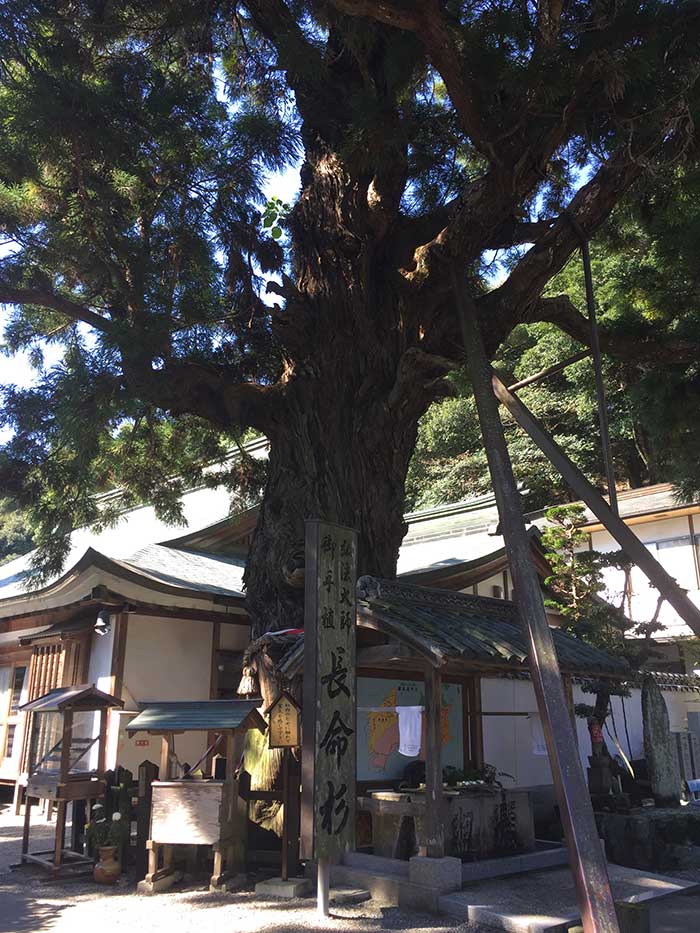
In the grounds stands a great cedar known as the Chōmei-sugi, the “long-life cedar,” which tradition says was planted by Kōbō Daishi himself.
Now well over a thousand years old and more than thirty metres tall, it is protected as a natural monument, and many visitors pause to touch its enormous trunk in the hope of health and long life.
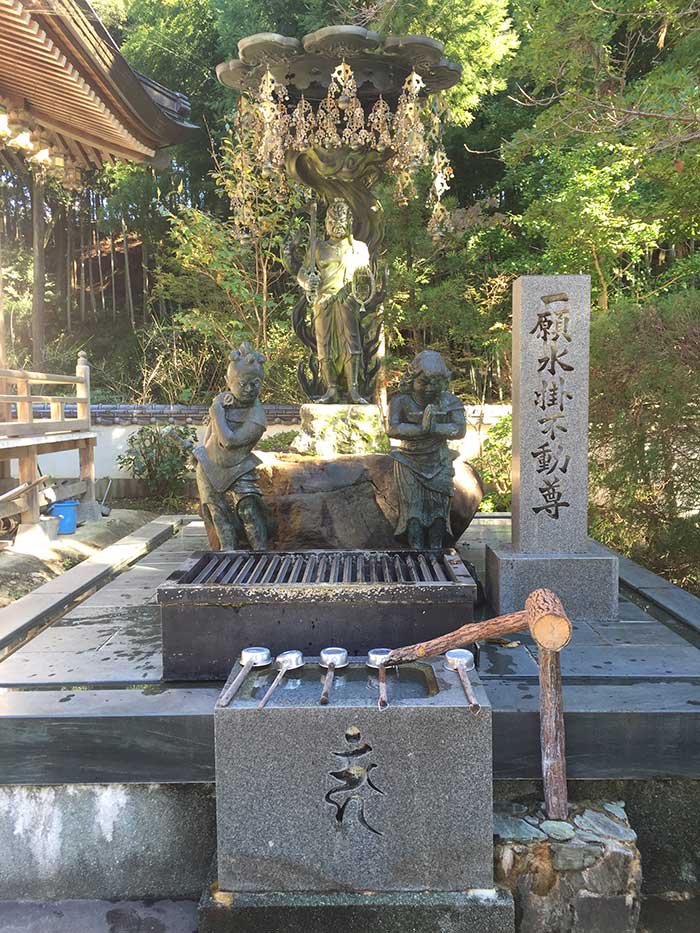
There was also a statue of Fudō Myōō in the grounds, before which water is offered as part of one’s prayer. Its fierce expression is meant not to frighten but to cut through delusion and protect those who come to pray.
I stopped there briefly before moving on, struck by how different its energy felt from the calm of the Amida hall.
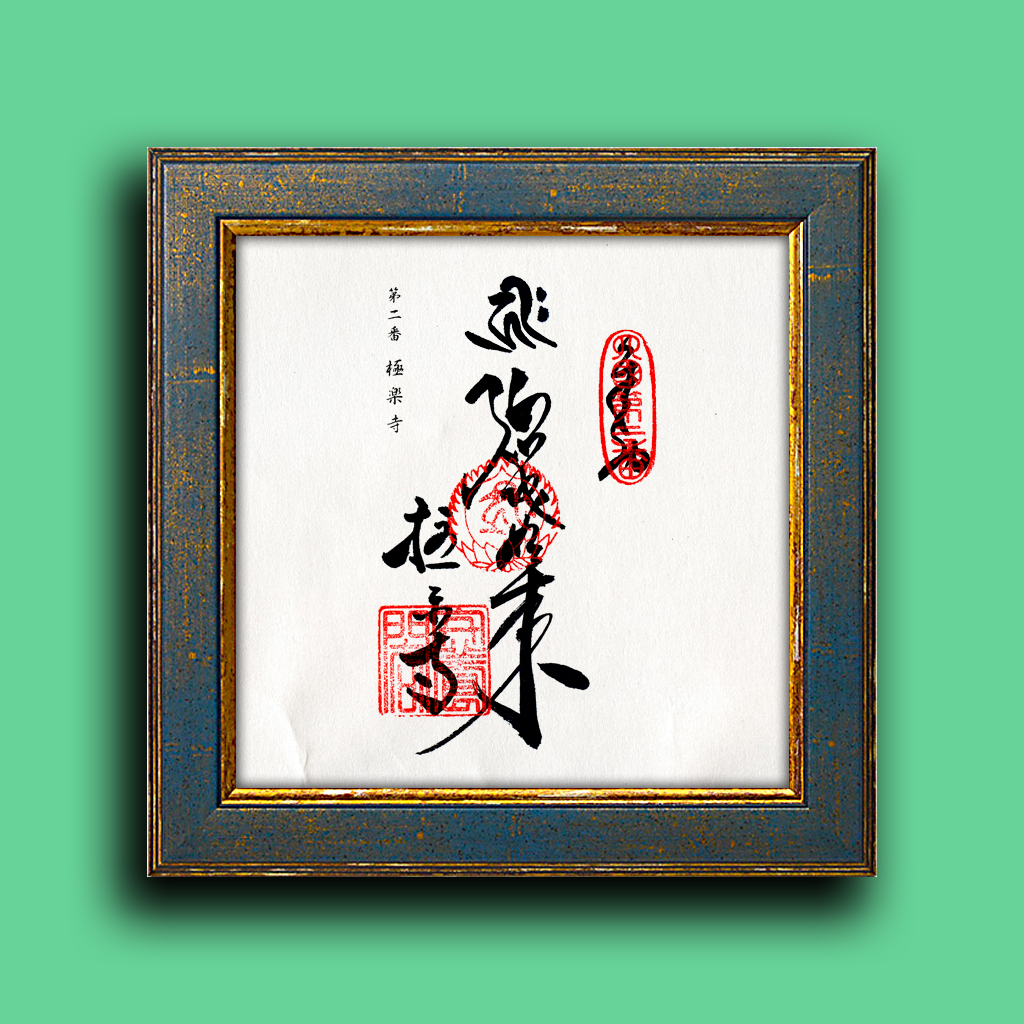
NFT – Crypto Ohenro #87 Goshuin of Gokuraku-ji(極楽寺) –
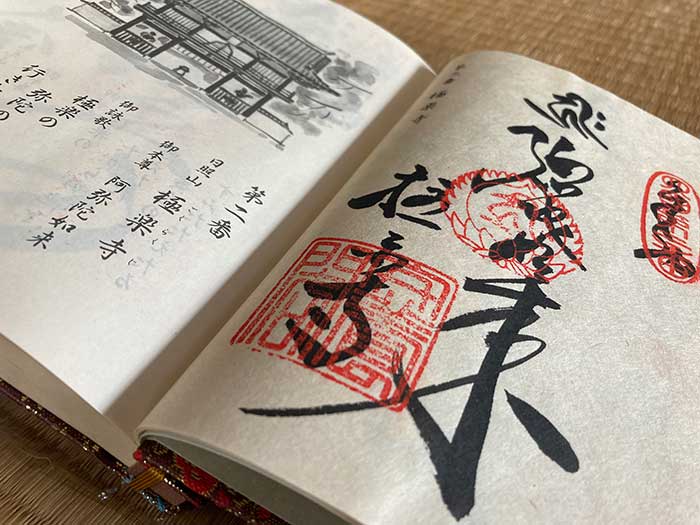
This is the goshuin of the second temple, Gokuraku-ji. The brushwork has a clear, confident strength to it that I paused to admire.
From here, the next temple would be the very last of my journey, and the thought lent each step a quiet weight.
The distance to it was only about 1.2 km — a short, almost gentle walk to close the circle.
Frequently Asked Questions
What is the honzon (principal image) of Gokuraku-ji (Temple 2)?
The honzon (principal image) of Gokuraku-ji(極楽寺), Temple 2 of the Shikoku 88 pilgrimage, is Amida Nyorai(阿弥陀如来). It is enshrined in the temple's main hall (hondō), where pilgrims offer incense, recite the Heart Sutra, and receive the temple's goshuin (hand-brushed seal).
Where is Gokuraku-ji located?
Gokuraku-ji stands in Naruto, Tokushima Prefecture, in the old province of Awa, on the island of Shikoku, Japan. It is the second of the eighty-eight temples of the Shikoku Henro, the circular Buddhist pilgrimage walked in the path of Kōbō Daishi (Kūkai).
Which Buddhist sect does Gokuraku-ji belong to?
Gokuraku-ji belongs to the Kōyasan school of Shingon Buddhism. Its mountain name (sangō), the traditional honorific title by which the temple is also known, is Nisshōzan Muryōju-in(日照山 無量寿院).
When was Gokuraku-ji founded?
Gokuraku-ji was founded by Gyōki; Kōbō Daishi (Kūkai) trained here for 37 days in 815. Its history is closely tied to the early growth of the Shikoku pilgrimage.
Which temple comes after Gokuraku-ji, and how far is it?
The next temple on the route is Temple 3, Konsen-ji (about 2.5 km). Walking in numerical order, pilgrims continue from Gokuraku-ji to keep visiting each of the 88 temples and collecting their goshuin.
📖 See the full list of all 88 Shikoku temples →
Can’t make the pilgrimage yourself?Ohenro Gift can walk the 88 temples on your behalf (daisan) and deliver the completed nokyocho.