The twelfth temple is Shōsan-ji (焼山寺), the “Burning Mountain Temple,” which enshrines Kokūzō Bosatsu high on its mountainside.
It lies about 25.3 km from the thirteenth temple, and at roughly 700 metres’ elevation it is the second-highest temple on the whole pilgrimage.
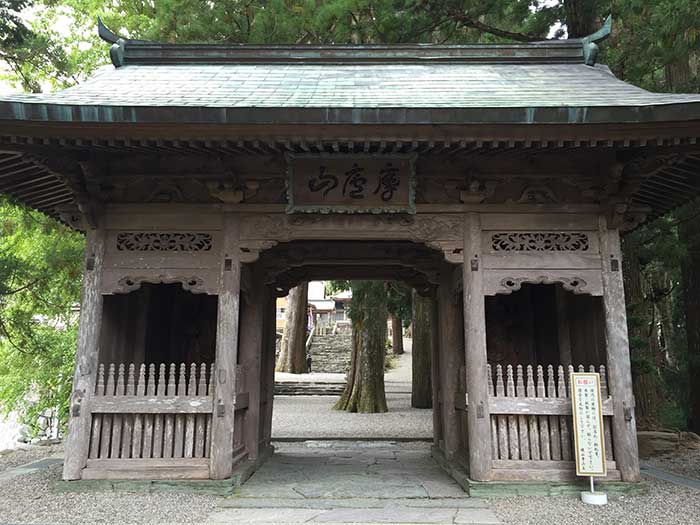
This is the entrance to Shōsan-ji. The weathered, aged wood and the deep green of the roof make a wonderful sight after the long climb up.
Reaching this gate is, for many walking pilgrims, the end of the first truly hard stretch of the journey.
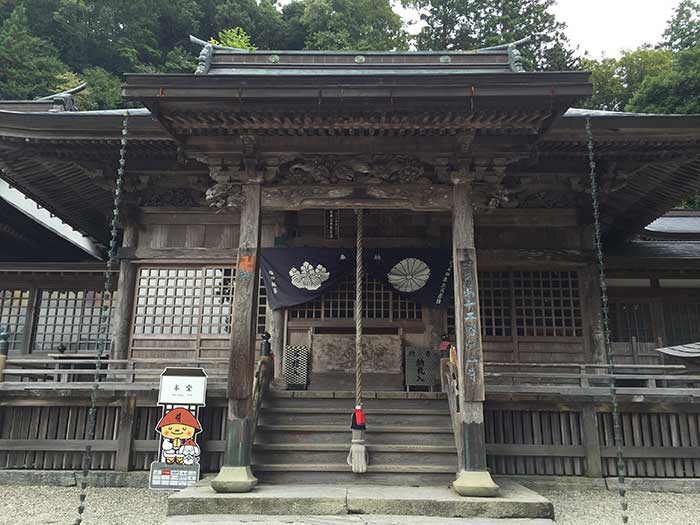
This is the main hall, where Kokūzō Bosatsu is enshrined. Tradition tells of a fire-breathing serpent that once raged across this mountain, which Kōbō Daishi subdued and sealed away with the help of Kokūzō Bosatsu — the story behind the temple’s “burning mountain” name.
I offered incense and recited the sutra, glad to have arrived at last.
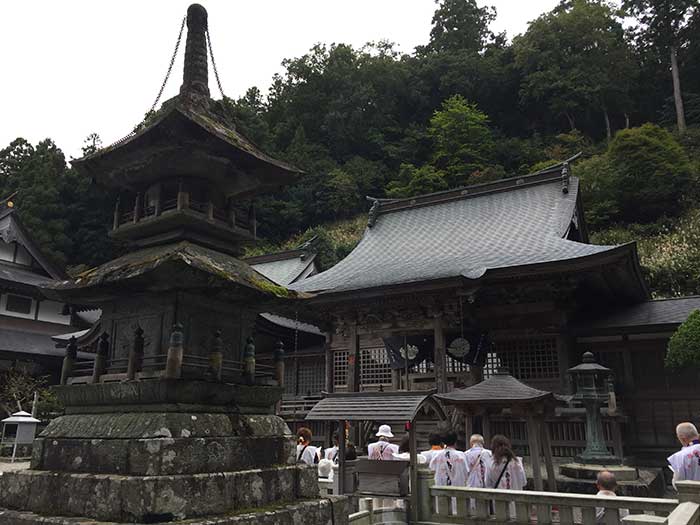
A group of pilgrims on a guided tour were worshipping as I arrived, and their chanting of the sutra echoed powerfully through the whole temple.
The sound filling the mountain air gave the place a deep, resonant atmosphere.
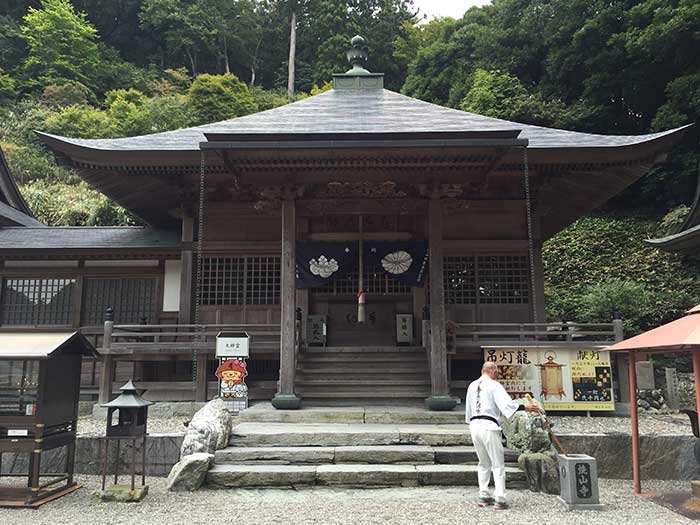
Next, at the Daishi-dō, I recited the Heart Sutra before the statue of Kōbō Daishi.
As at every temple, I prayed for the safety of my family and for peace in the world.
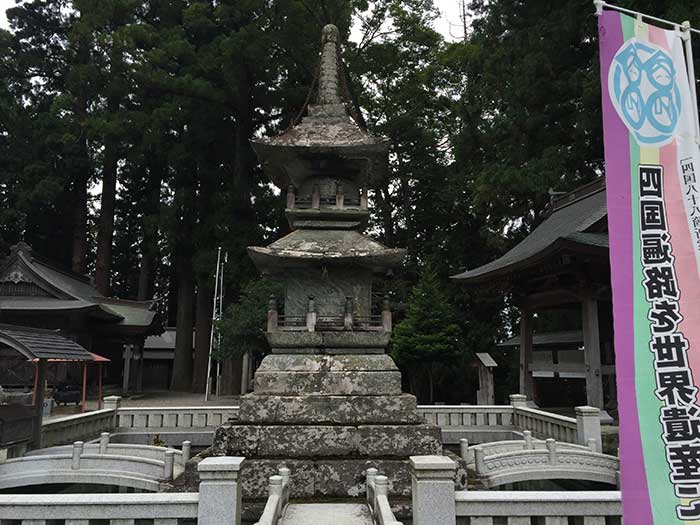
In the precincts stands a stone statue that looks as though it has been here since very ancient times.
Worn smooth by the centuries, it is a quiet reminder of how many pilgrims have passed this way before.
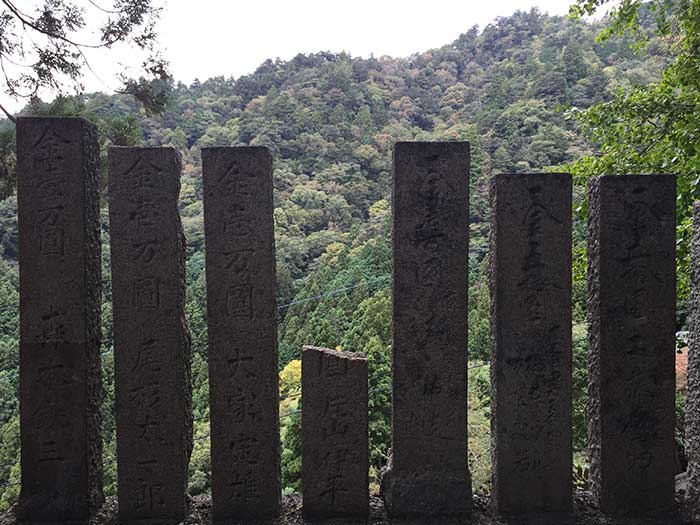
The view from the road leading up to the temple is simply amazing, with ridge after ridge of mountains opening out into the distance.
It is the kind of scenery that rewards the effort of the climb many times over.
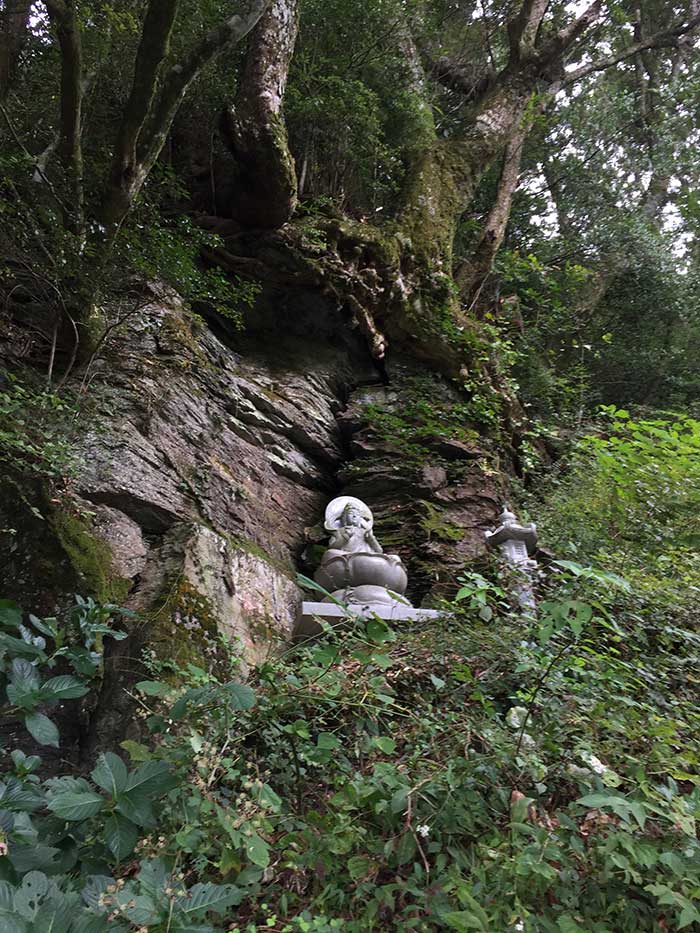
A Buddha image is also enshrined upon a large rock here, set naturally into the rugged landscape of the mountain.
Stone and statue seem to belong to one another, as if the figure had always been part of the rock.
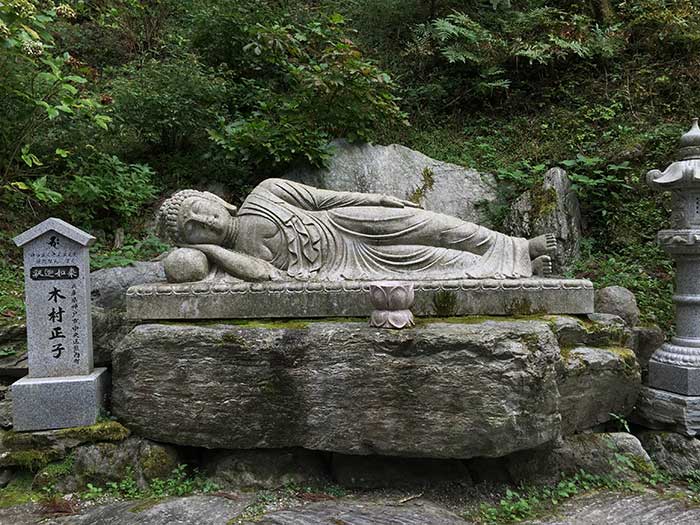
There is also a reclining Buddha — a form seen more often in Thailand than in Japan, where it appears only occasionally.
Coming upon it unexpectedly on a Shikoku mountainside made it all the more memorable.
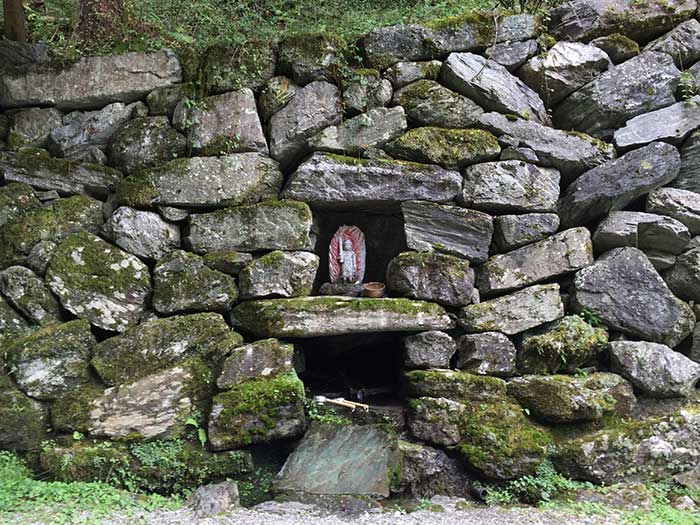
Tucked into a hollow in the rock is a small stone statue of Fudō Myōō, easy to walk straight past if you are not looking for it.
Finding it felt like a small reward for taking the time to look closely.
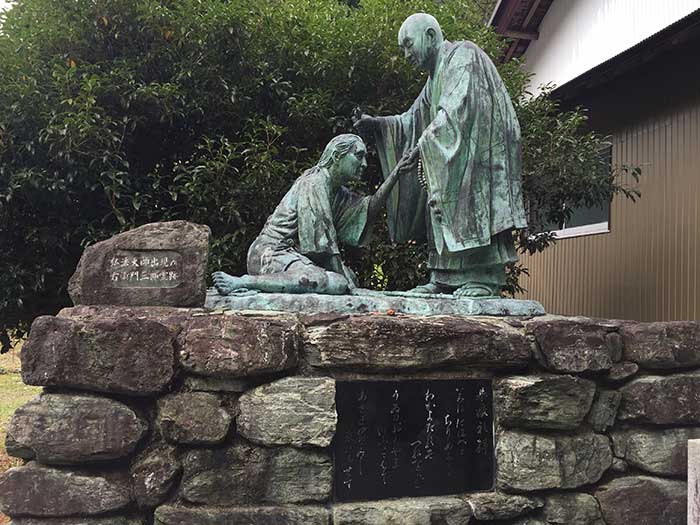
There is also a statue telling the story of Kōbō Daishi, who is credited with spreading this pilgrimage across Japan.
It is a fitting tribute here, at one of the most demanding and storied temples on the whole route.
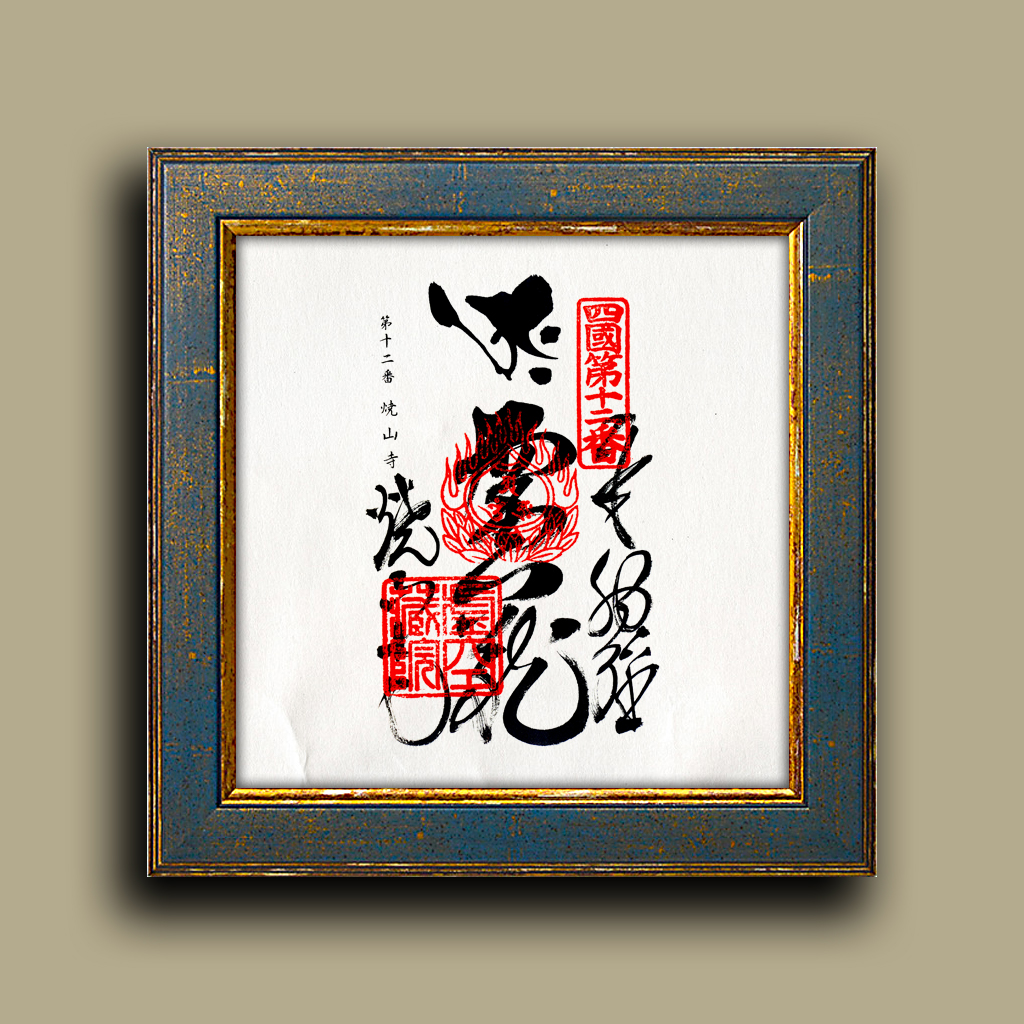
NFT – Crypto Ohenro #77 Goshuin of Shōsan-ji(焼山寺) –
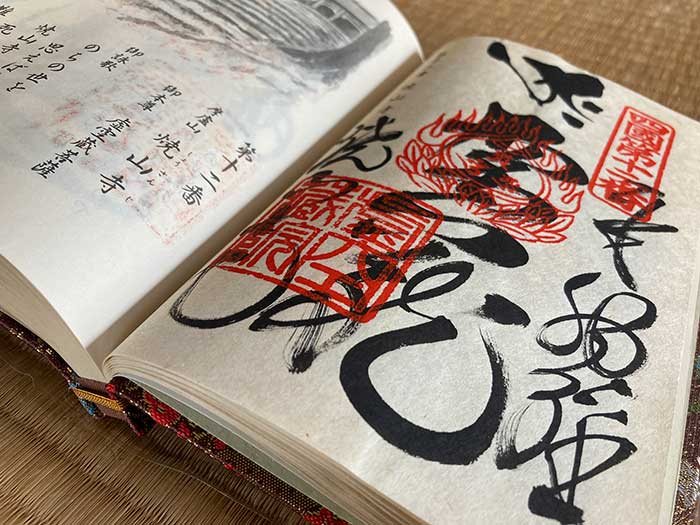
This is the goshuin of the twelfth temple, Shōsan-ji, hard-won at the top of the pilgrimage’s first great climb.
Eleven temples still remained on my journey, but having reached this height, I felt I could manage whatever came next.
The distance to the next temple was about 12.9 km, a long descent back down the mountain.
Frequently Asked Questions
What is the honzon (principal image) of Shōsan-ji (Temple 12)?
The honzon (principal image) of Shōsan-ji(焼山寺), Temple 12 of the Shikoku 88 pilgrimage, is Kokūzō Bosatsu(虚空蔵菩薩). It is enshrined in the temple's main hall (hondō), where pilgrims offer incense, recite the Heart Sutra, and receive the temple's goshuin (hand-brushed seal).
Where is Shōsan-ji located?
Shōsan-ji stands in Kamiyama, Tokushima Prefecture, in the old province of Awa, on the island of Shikoku, Japan. It is the twelfth of the eighty-eight temples of the Shikoku Henro, the circular Buddhist pilgrimage walked in the path of Kōbō Daishi (Kūkai).
Which Buddhist sect does Shōsan-ji belong to?
Shōsan-ji belongs to the Kōyasan school of Shingon Buddhism. Its mountain name (sangō), the traditional honorific title by which the temple is also known, is Maōzan Shōju-in(摩廬山 正寿院).
When was Shōsan-ji founded?
Shōsan-ji was founded by En no Gyōja; re-established by Kōbō Daishi (Kūkai) in 815. Its history is closely tied to the early growth of the Shikoku pilgrimage.
Which temple comes after Shōsan-ji, and how far is it?
The next temple on the route is Temple 13, Dainichi-ji (about 25.3 km). Walking in numerical order, pilgrims continue from Shōsan-ji to keep visiting each of the 88 temples and collecting their goshuin.
📖 See the full list of all 88 Shikoku temples →
Can’t make the pilgrimage yourself?Ohenro Gift can walk the 88 temples on your behalf (daisan) and deliver the completed nokyocho.