The thirty-second temple is Zenjibu-ji (禅師峰寺), perched on a hilltop above Tosa Bay and enshrining an Eleven-Headed Kannon.
It stands about 7.5 km from the thirty-third temple, with the Pacific spread out below.
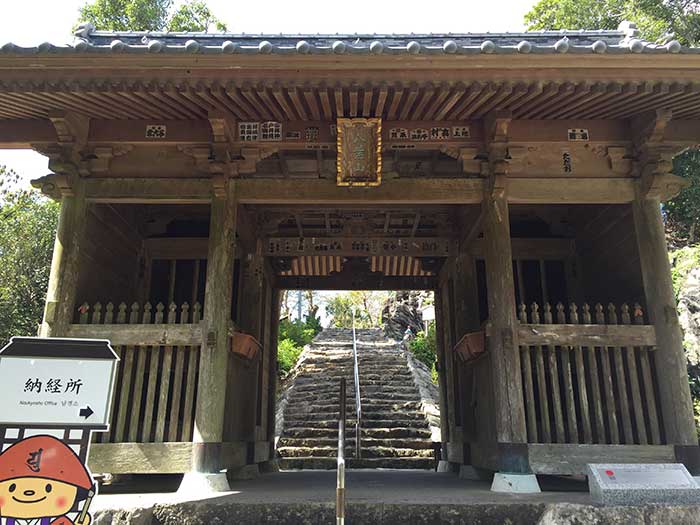
This is the entrance to Zenjibu-ji. Beyond the magnificent gate, a long stone staircase climbs up toward the hall.
The ascent, with the sea at your back, builds a real sense of arrival.
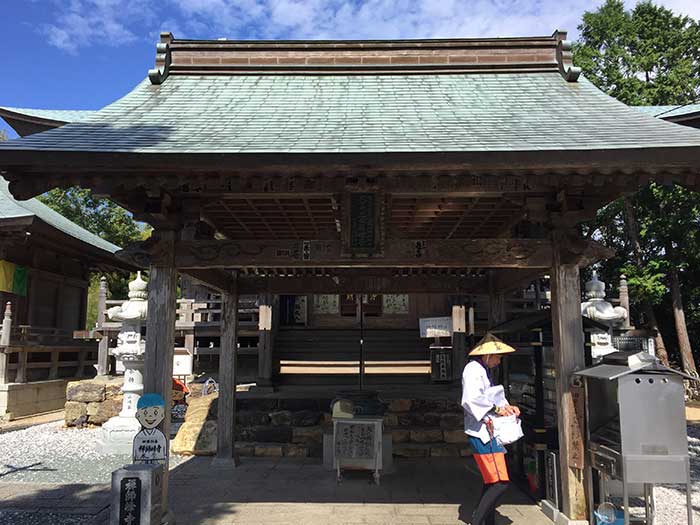
This is the main hall, where the Eleven-Headed Kannon is enshrined. Fishermen and feudal lords alike once prayed to this image as the Funadama Kannon, guardian of ships and safe voyages.
I offered incense and recited the sutra before so storied a Kannon.
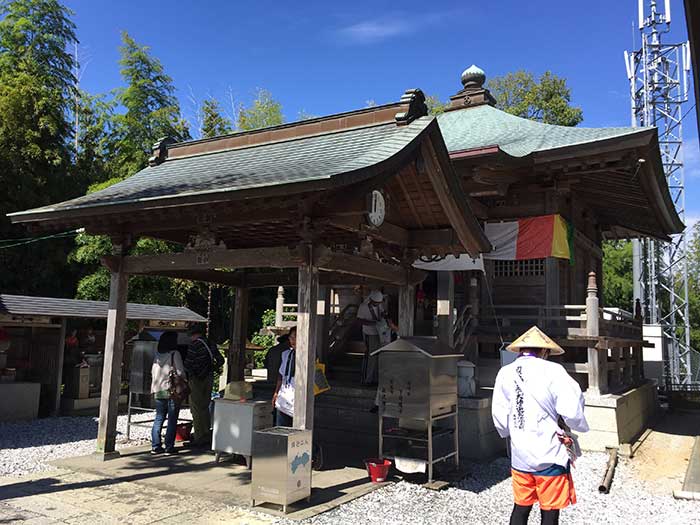
Next, at the Daishi-dō, I recited the Heart Sutra, praying for the safety of my family, for peace in the world, and — with a smile — for good food along the way.
Even the smallest honest wishes seem welcome at these halls.
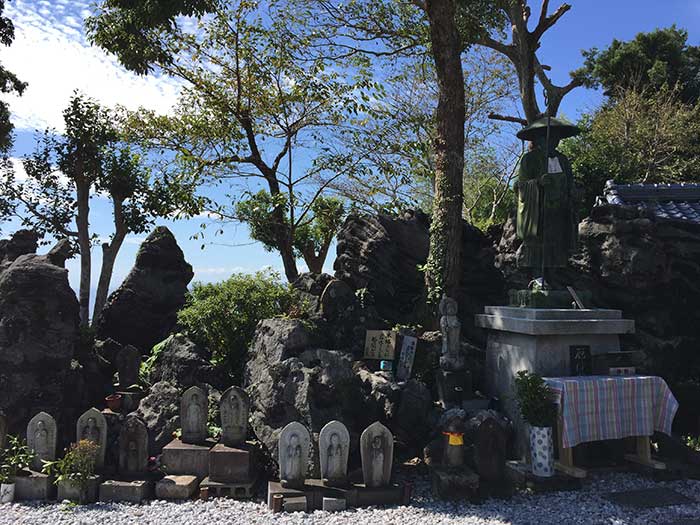
Bronze statues of Kōbō Daishi and of Jizō stand dotted, almost at random, about the precincts among the strange weathered rocks.
The mix of stone, statue and sea view gives the hilltop a quietly otherworldly feel.
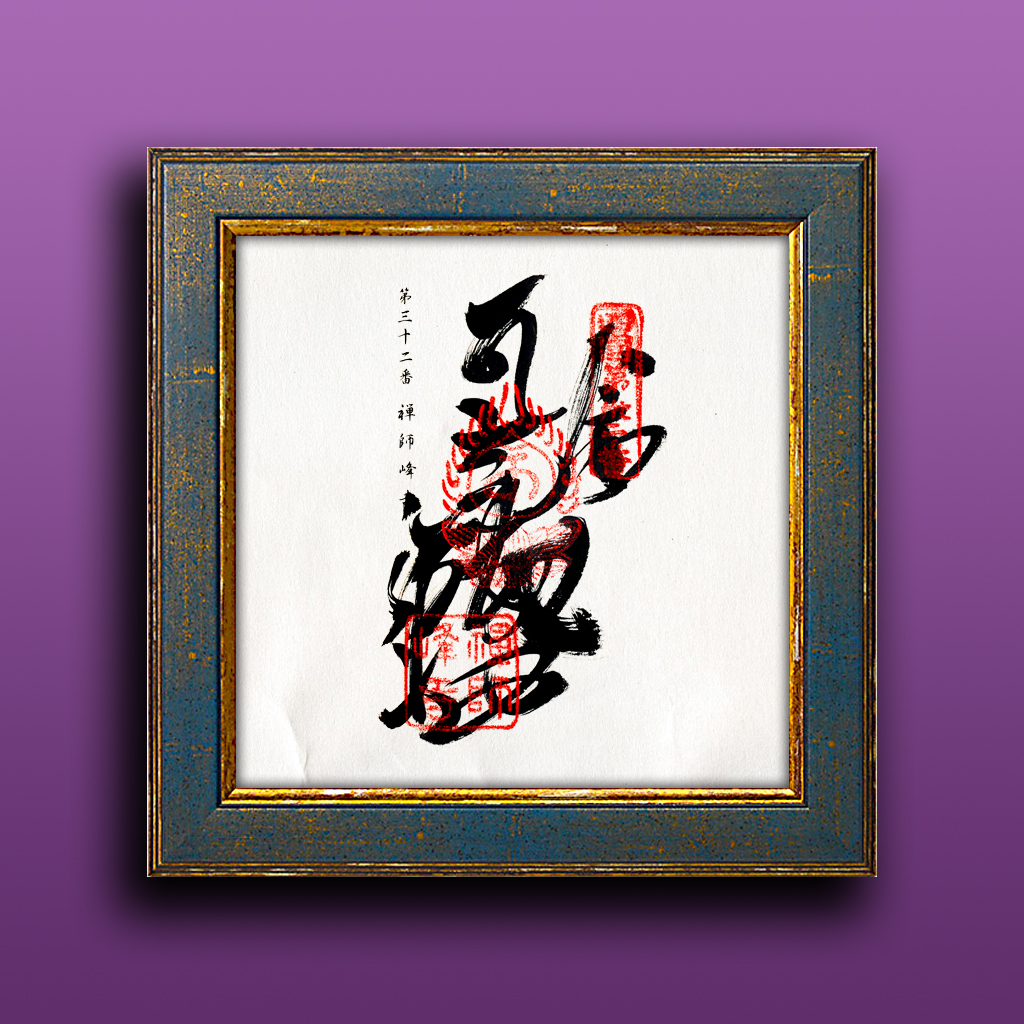
NFT – Crypto Ohenro #57 Goshuin of Zenjibu-ji(禅師峰寺) –
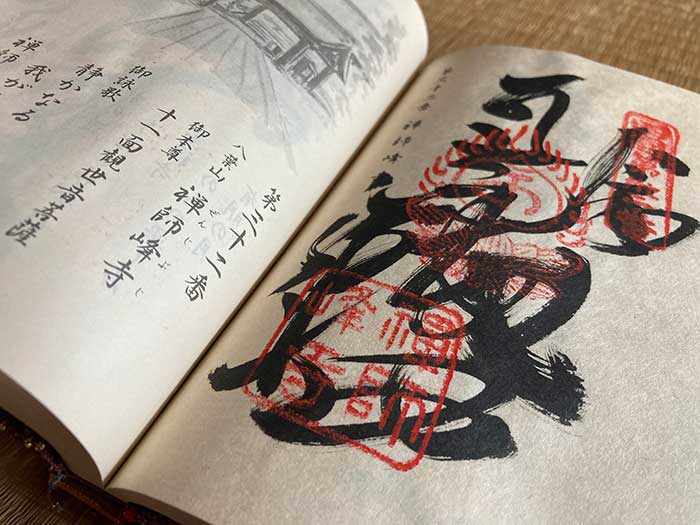
This is the goshuin of the thirty-second temple, Zenjibu-ji, received on its rocky hilltop above the sea.
Thirty-one temples still remained on my journey, the Pacific glinting far below.
The distance to the next temple was about 5.7 km, a steady walk down toward the coast.
Frequently Asked Questions
What is the honzon (principal image) of Zenjibu-ji (Temple 32)?
The honzon (principal image) of Zenjibu-ji(禅師峰寺), Temple 32 of the Shikoku 88 pilgrimage, is Jūichimen Kanzeon Bosatsu(十一面観世音菩薩). It is enshrined in the temple's main hall (hondō), where pilgrims offer incense, recite the Heart Sutra, and receive the temple's goshuin (hand-brushed seal).
Where is Zenjibu-ji located?
Zenjibu-ji stands in Nankoku, Kōchi Prefecture, in the old province of Tosa, on the island of Shikoku, Japan. It is the thirty-second of the eighty-eight temples of the Shikoku Henro, the circular Buddhist pilgrimage walked in the path of Kōbō Daishi (Kūkai).
Which Buddhist sect does Zenjibu-ji belong to?
Zenjibu-ji belongs to the Shingon Buddhism (Toyoyama school). Its mountain name (sangō), the traditional honorific title by which the temple is also known, is Hachiyōzan Gumonji-in(八葉山 求聞持院).
When was Zenjibu-ji founded?
Zenjibu-ji was founded by Kōbō Daishi (Kūkai), early 9th century. Its history is closely tied to the early growth of the Shikoku pilgrimage.
Which temple comes after Zenjibu-ji, and how far is it?
The next temple on the route is Temple 33, Sekkei-ji (about 7.5 km). Walking in numerical order, pilgrims continue from Zenjibu-ji to keep visiting each of the 88 temples and collecting their goshuin.
📖 See the full list of all 88 Shikoku temples →
Can’t make the pilgrimage yourself?Ohenro Gift can walk the 88 temples on your behalf (daisan) and deliver the completed nokyocho.