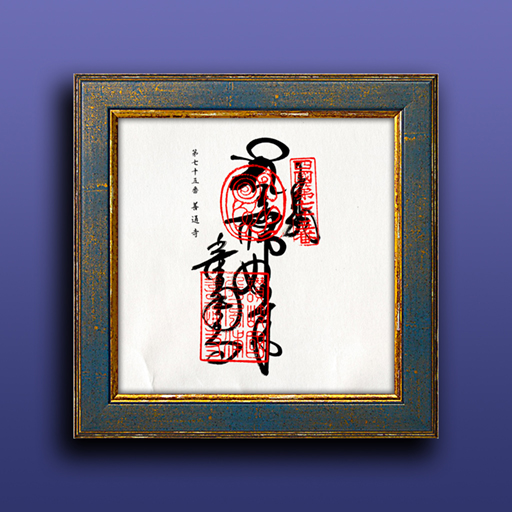
The seventy-fifth temple is Zentsū-ji (善通寺), the birthplace of Kōbō Daishi and head temple of the Zentsū-ji school, enshrining Yakushi Nyorai.
It lies about 3.8 km from the seventy-sixth temple, in the city that bears its name.
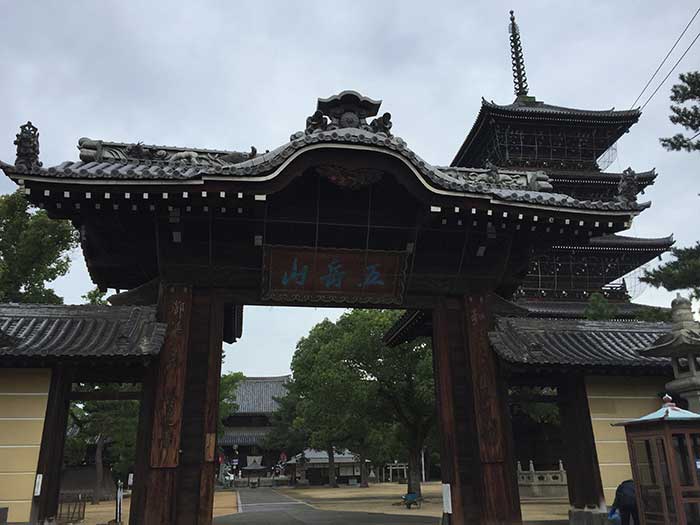
This is the entrance to Zentsū-ji. It is hard to capture in a photograph, but the grounds are vast, with a great pagoda rising behind.
The sheer scale announces at once that this is no ordinary temple.
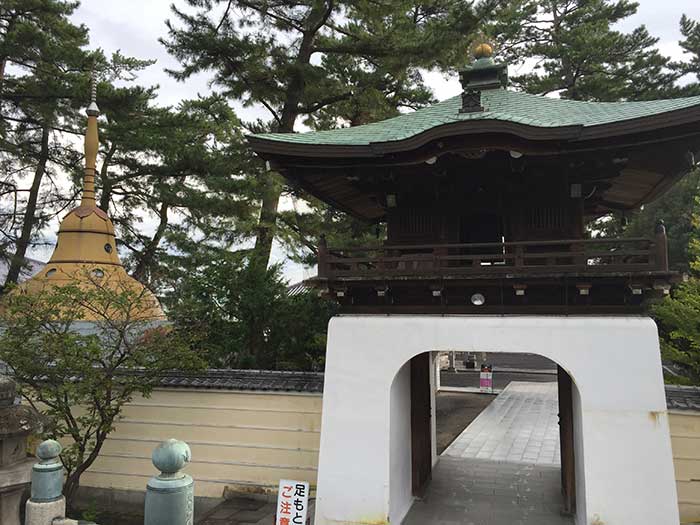
Within the grounds stands a distinctive low gate, beyond which a small pagoda comes into view.
Each turn of the wide precinct opens onto something new.
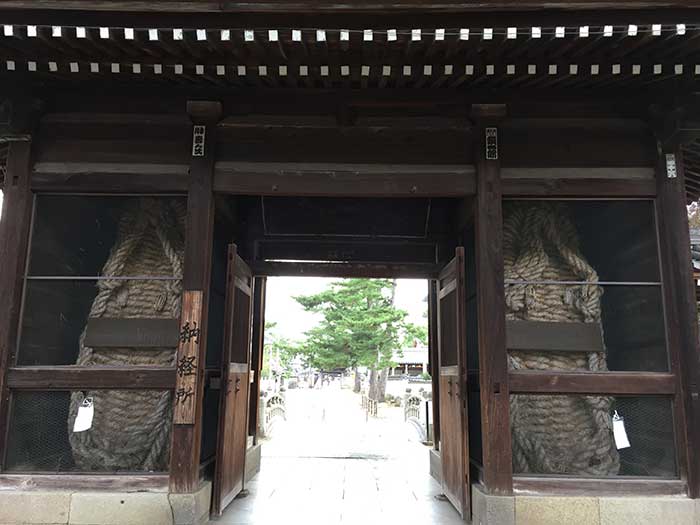
Large straw sandals are displayed at one of the gates along the way.
Offered for strong legs and safe walking, they are a welcome sight to any pilgrim.
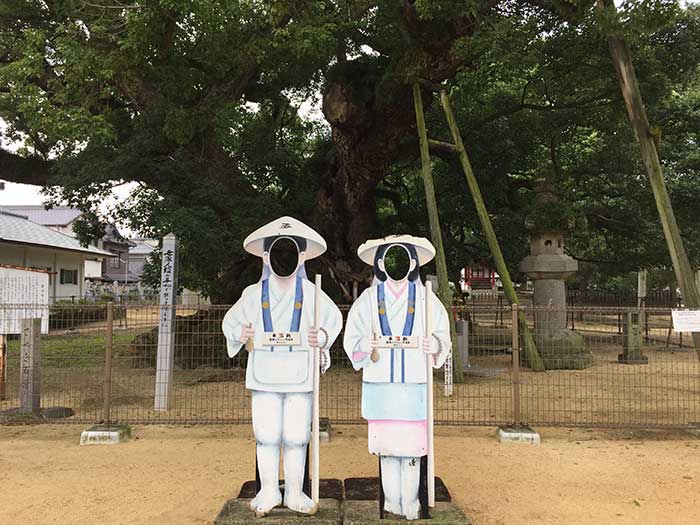
There is even a photo panel where you can poke your face through and have your picture taken — and become a pilgrim too, for a moment.
A light-hearted touch amid the grandeur, it made me smile.
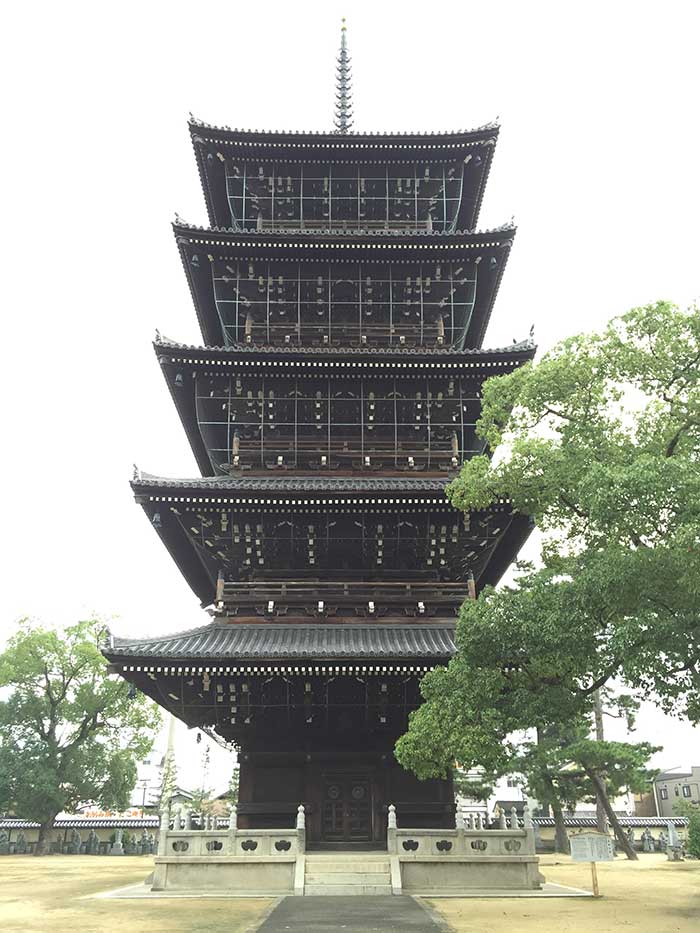
A very large five-storey pagoda towers overhead. Of all the five-storey pagodas across Japan, this is among the most magnificent.
Standing beneath it, you feel the full weight of the temple’s importance.
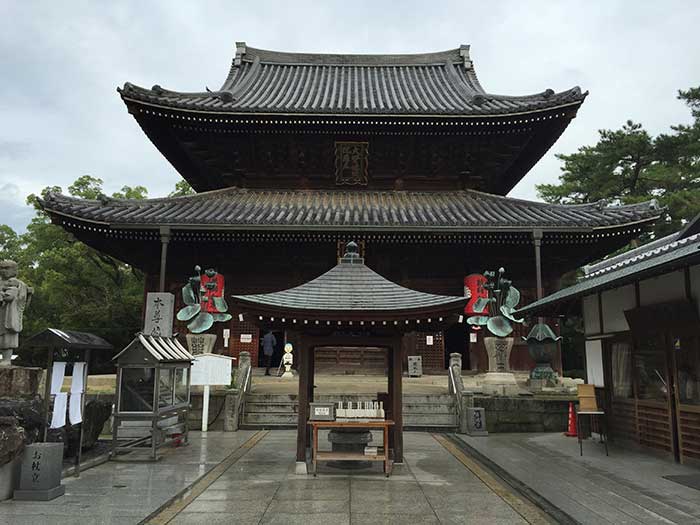
This is the main hall, where Yakushi Nyorai is enshrined. There I chanted the Heart Sutra.
To recite it at the birthplace of Kōbō Daishi himself felt deeply significant.
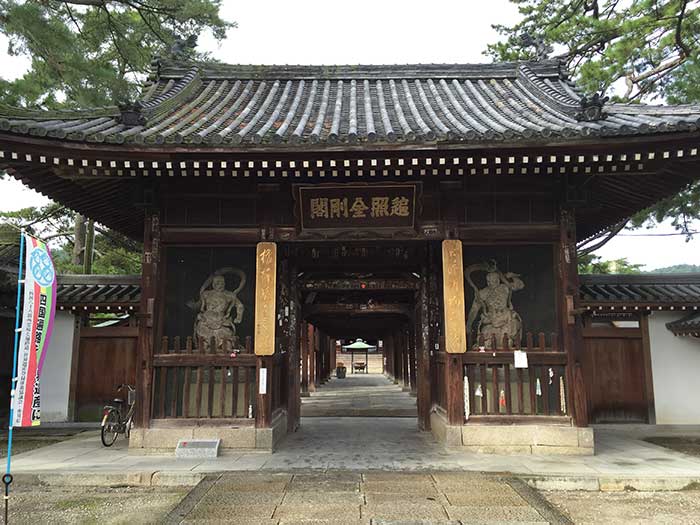
Before moving on to chant again, the next gate comes into view, with Kongō Rikishi guardians waiting on either side.
The guardians lend the approach a solemn, watchful air.
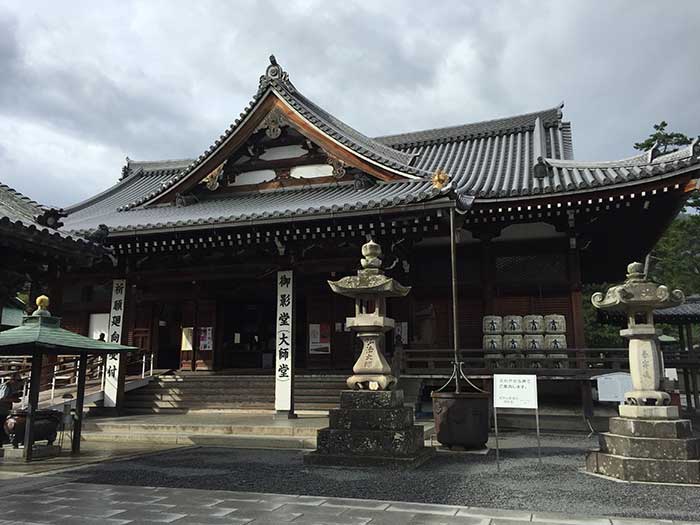
The Daishi-dō is very large and splendid. I chanted the Heart Sutra once more and prayed for the safety of my family and for peace in the world.
It stands over the very spot where Kōbō Daishi was born.
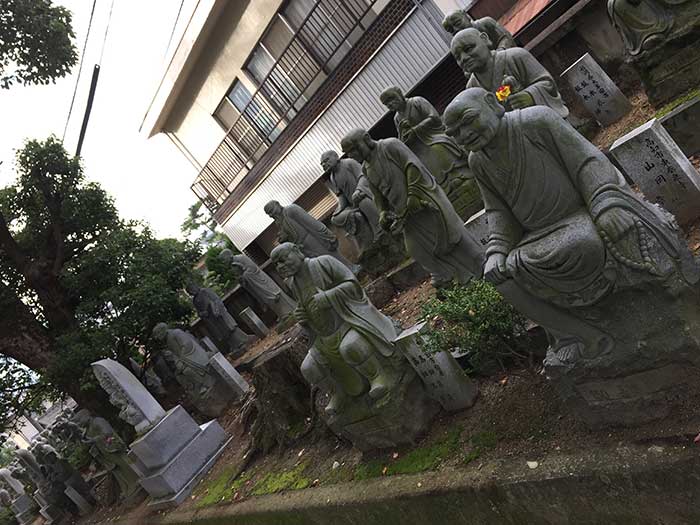
The temple is wonderfully spacious, with many other points of interest to discover.
You could easily spend hours wandering its two great precincts.
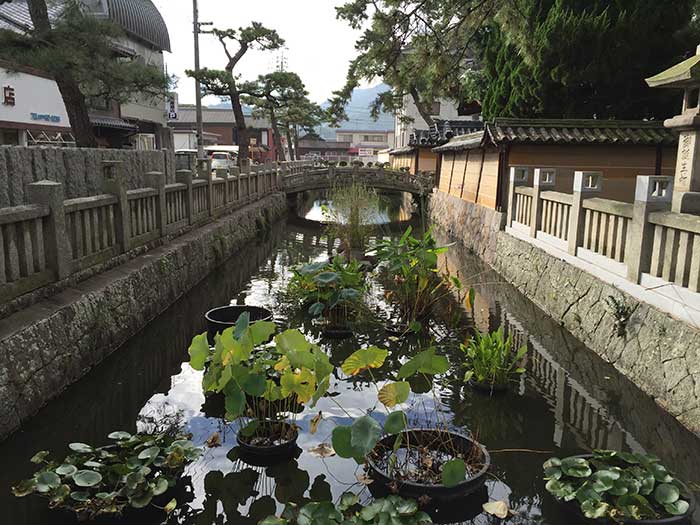
A moat runs around the temple, preserving a traditional Japanese atmosphere.
Beneath the Mieidō, pilgrims may also walk the pitch-dark passage of the kaidan-meguri.
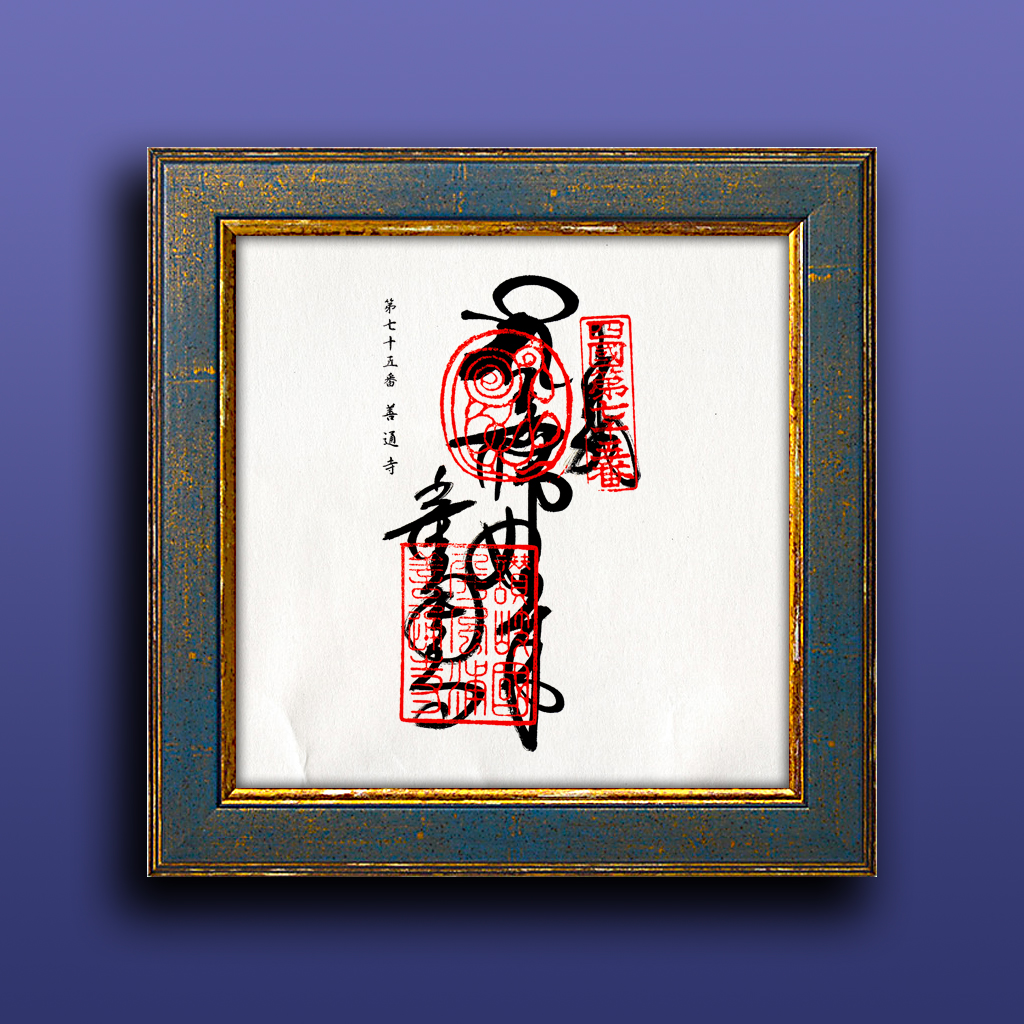
NFT – Crypto Ohenro #14 Goshuin of Zentsū-ji(善通寺) –
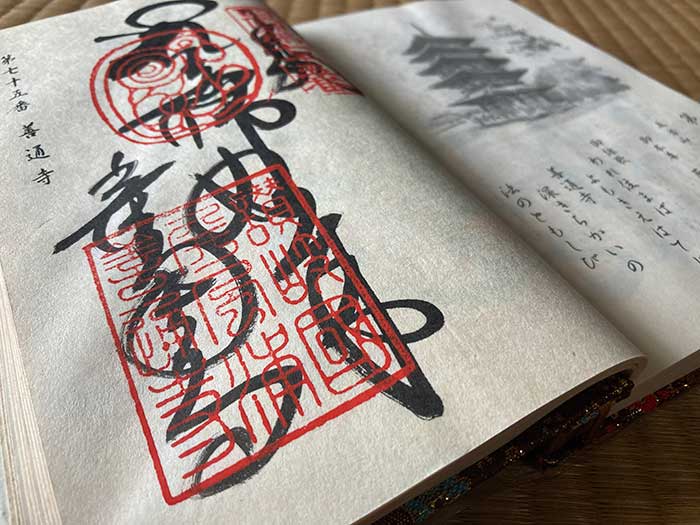
This is the goshuin of the seventy-fifth temple, Zentsū-ji, written in a distinctive, delicate style — received at the very birthplace of Kōbō Daishi.
Seventy-four temples still remained on my journey, and to stand here, where it all began for him, was deeply moving.
The distance to the next temple was about 1.6 km, a short walk through the town that bears the temple’s name.
Frequently Asked Questions
What is the honzon (principal image) of Zentsū-ji (Temple 75)?
The honzon (principal image) of Zentsū-ji(善通寺), Temple 75 of the Shikoku 88 pilgrimage, is Yakushi Nyorai(薬師如来). It is enshrined in the temple's main hall (hondō), where pilgrims offer incense, recite the Heart Sutra, and receive the temple's goshuin (hand-brushed seal).
Where is Zentsū-ji located?
Zentsū-ji stands in Zentsūji, Kagawa Prefecture, in the old province of Sanuki, on the island of Shikoku, Japan. It is the seventy-fifth of the eighty-eight temples of the Shikoku Henro, the circular Buddhist pilgrimage walked in the path of Kōbō Daishi (Kūkai).
Which Buddhist sect does Zentsū-ji belong to?
Zentsū-ji belongs to the Head temple of the Shingon-shū Zentsū-ji school. Its mountain name (sangō), the traditional honorific title by which the temple is also known, is Gogakuzan Tanjō-in(五岳山 誕生院).
When was Zentsū-ji founded?
Zentsū-ji was founded by Kōbō Daishi (Kūkai) in 807, at his birthplace. Its history is closely tied to the early growth of the Shikoku pilgrimage.
Which temple comes after Zentsū-ji, and how far is it?
The next temple on the route is Temple 76, Konzō-ji (about 3.8 km). Walking in numerical order, pilgrims continue from Zentsū-ji to keep visiting each of the 88 temples and collecting their goshuin.
📖 See the full list of all 88 Shikoku temples →
Can’t make the pilgrimage yourself?Ohenro Gift can walk the 88 temples on your behalf (daisan) and deliver the completed nokyocho.